One Community Title at a Time: Kenya’s Drylands Are Reclaiming Their Future
Article by Jarso Mokku, PhD, CEO, Drylands Learning and Capacity Building Initiative.
In Kenya’s vast and resilient drylands, a subtle change is unfolding; one community at a time is taking bold steps through the demand for the issuance of community land title deeds. Communities traditionally excluded from formal land ownership are now asserting their ancestral rights, enabled by the 2016 Community Land Act. This significant law, aligned with the constitutional timeline and backed by the Pastoralist Parliamentary Group, represents more than just land rights; it embodies dignity, independence, and the authority for communities to govern themselves once again.
The first beacon of this transformation was lit in Garissa County, where the Kamuthe community became the first former trustland group to receive a community title deed. Their journey from legal invisibility to recognized ownership set a precedent for others to follow. Soon after, the Arsim and Narimirimo communities in Samburu County received their titles, marking the second and third milestones in this historic shift. So far, more than fifteen communities in drylands have received their community land titles. The process is moving forward slowly but steadily.
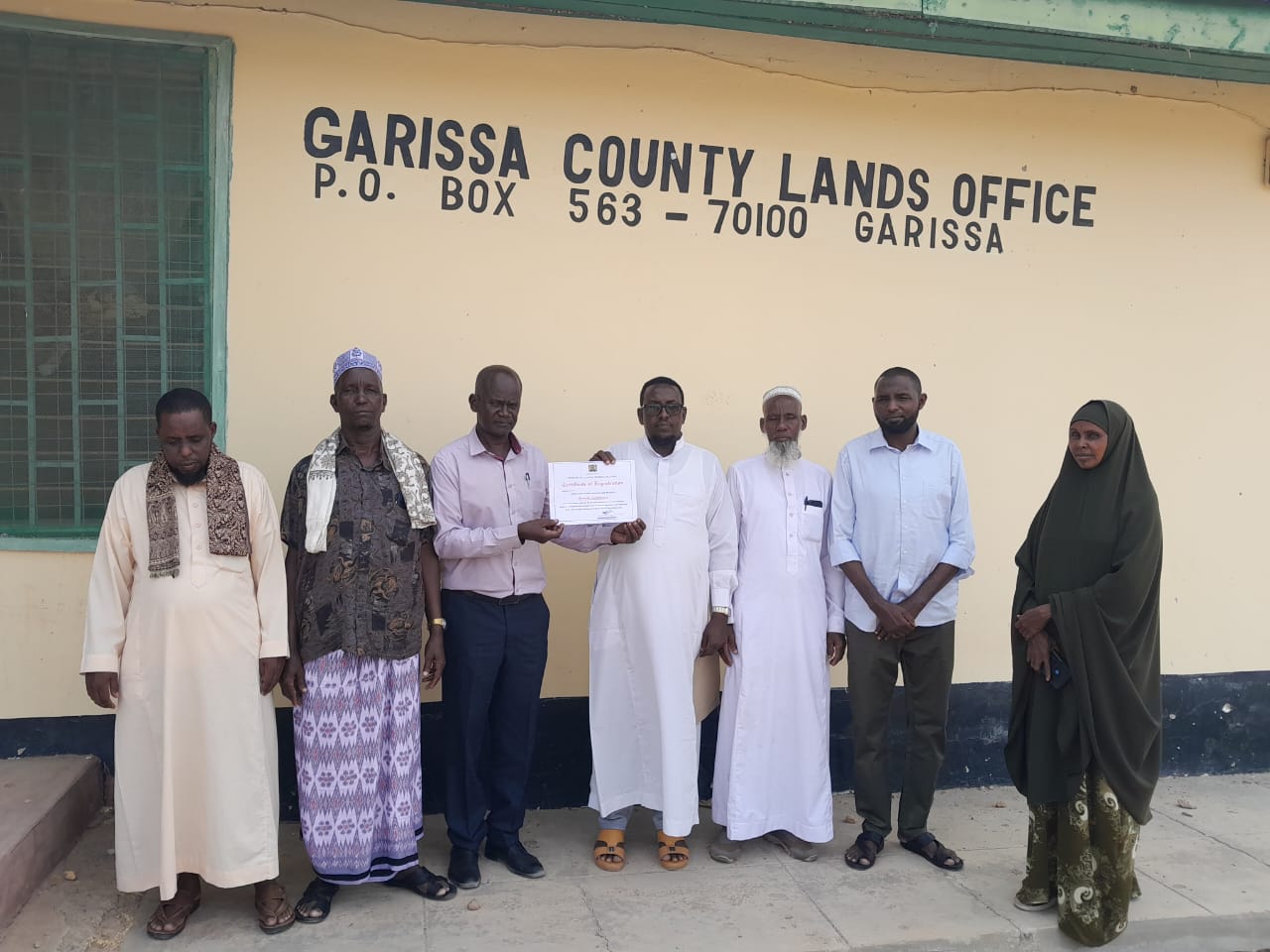
Kamuthe Community Land Management Committee receiving their Community Land Registration Certificate
These titles are more than paper—they are instruments of justice. They empower remote communities to:
- Govern their rangelands and natural resources
- Resist land grabs and external exploitation
- Plan for climate resilience and sustainable development
- Negotiate with investors from a position of strength
At the heart of this initiative and achievement is the DLCI (Drylands Learning and Capacity Building Initiative), which also acts as the secretariat for Kenya’s largest parliamentary caucus, the PPG, and collaborates with various CSOs, county governments, and the Ministry of Land. Support from CSOS has been vital in helping communities handle complex legal and administrative tasks. From raising awareness to engaging stakeholders, CSO networks and land sector forums were established, and DLCI assisted in connecting them with duty bearers and elected pastoralist representatives. The role of DLCI in this process is to oversee national-level activities and ensure inclusive progress for all communities.
Today, over 200 communities across Garissa, Wajir, Marsabit, Tana River, Turkana, Samburu, Isiolo, and West Pokot have been legally recognized. Many have elected Community Land Management Committees, received certificates of recognition, or secured community land title deeds. Others are deeply involved in adjudication and survey processes.
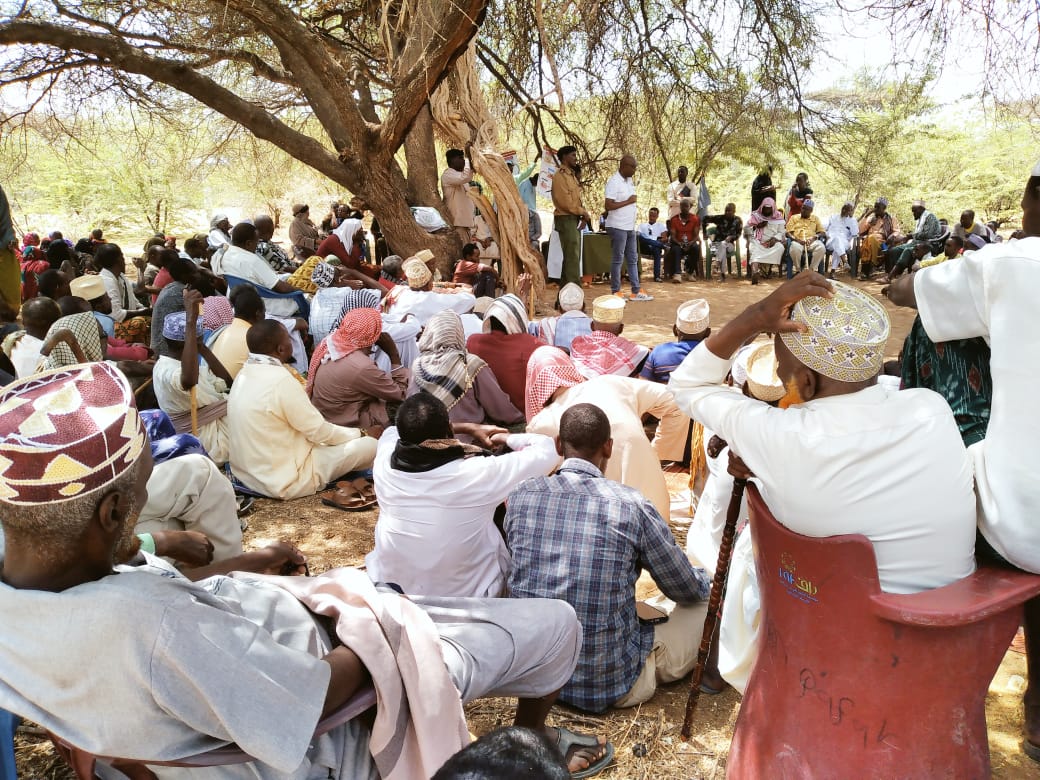
Community Land Meeting in Kamuthe, Garissa County
But this momentum must be protected. Kenya and development partners must increase investment in:
- Fast-tracking community land registration and adjudication, surveying and demarcating the community land territories, including supporting mediation and dispute resolutions that go with it as a package.
- Strengthening community-led, county-level land governance structures. Bring together the county government to learn how to work with community land management committees in coordinating development interventions, including agreeing on models and frameworks for engaging with investors & private sector investments on registered community lands.
- Supporting community land use planning and natural resource mapping.
- Ensuring inter-county coordination for cross-boundary, nature-based, natural resource sharing protocols and development strategies on registered community lands.
The future of Kenya’s drylands—and the communities who call them home—depends on our collective resolve to uphold the spirit of the Community Land Act. When communities govern themselves, rangelands flourish, peace prevails, and development becomes truly inclusive.