Hillary Kitel—Programs and Communications Officer
For decades, dryland communities have demonstrated remarkable resilience in the face of droughts, resource scarcity, climate variability, market fluctuations, and insecurity. Yet despite contributing significantly to national economies through livestock production, trade, and natural resource management, dryland regions have often remained underserved by infrastructure, information systems, and development investments.
Today, that reality is beginning to change.
The recent Digital Innovations and Information Systems Workshop held in Naivasha brought together government institutions, researchers, private sector innovators, development partners, and community representatives to explore how digital technologies can strengthen resilience and livelihoods in Kenya’s drylands and other fragile and conflict-affected settings.
The discussions highlighted a powerful reality: digital innovations are no longer optional tools for development, they are becoming essential enablers of informed decision-making, climate adaptation, and economic growth.
Turning Information into Action
One of the most significant challenges facing dryland communities is access to timely and actionable information.
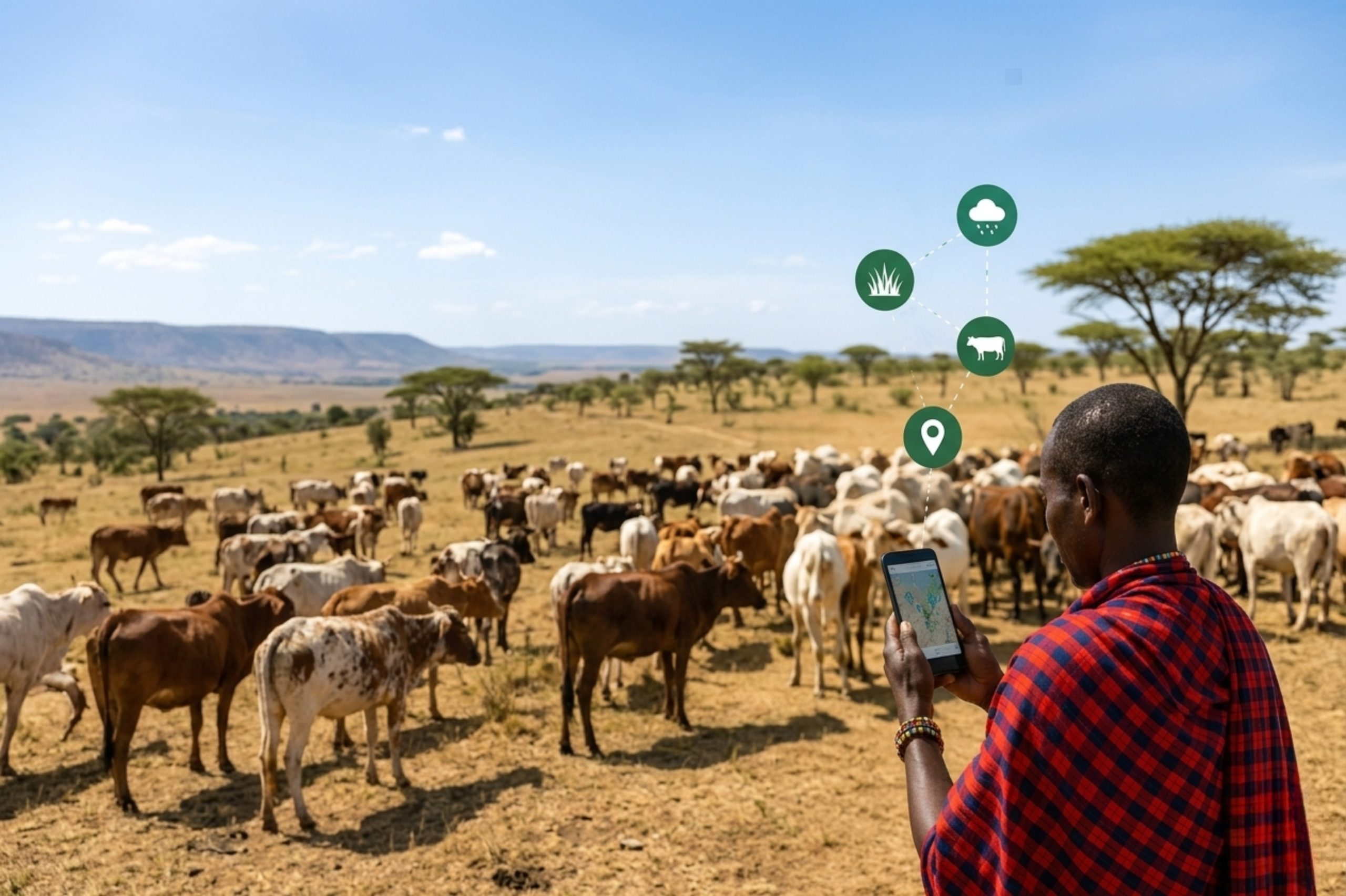
Pastoralist households often make critical decisions regarding livestock mobility, grazing management, market participation, and drought preparedness based on the information available to them. When information arrives too late, the consequences can be severe, including livestock losses, reduced incomes, and heightened vulnerability.
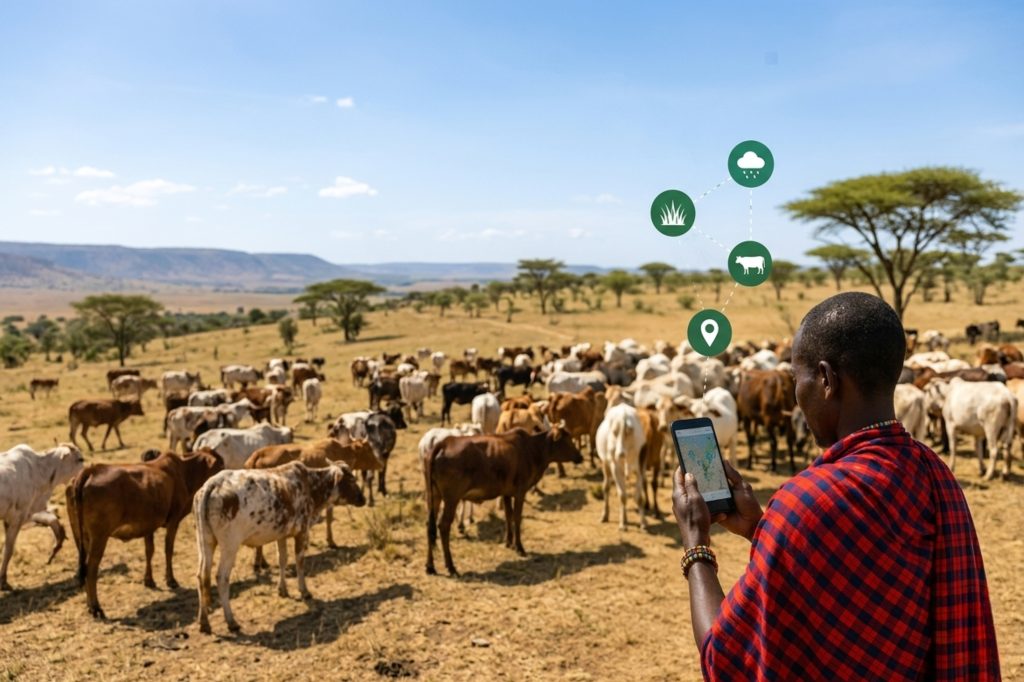
Digital weather and climate information systems are helping address this challenge by providing forecasts, drought alerts, and advisories that enable communities to anticipate risks and take proactive measures before crises occur.
The shift from emergency response to anticipatory action is perhaps one of the most important contributions digital innovations can make to dryland resilience.
Enhancing Livestock Markets Through Technology
Livestock remain the backbone of many dryland economies. However, livestock producers have historically faced challenges accessing reliable market information, connecting with buyers, and obtaining fair prices for their animals.
Digital livestock marketing platforms are changing this landscape by improving transparency, reducing information asymmetries, and connecting producers directly to broader markets.
By providing real-time market information, digital trading opportunities, and value chain linkages, these innovations can strengthen household incomes while increasing efficiency across livestock production systems.
For pastoralist communities, better market access translates directly into improved livelihoods and greater economic resilience.
Monitoring Rangelands from Space
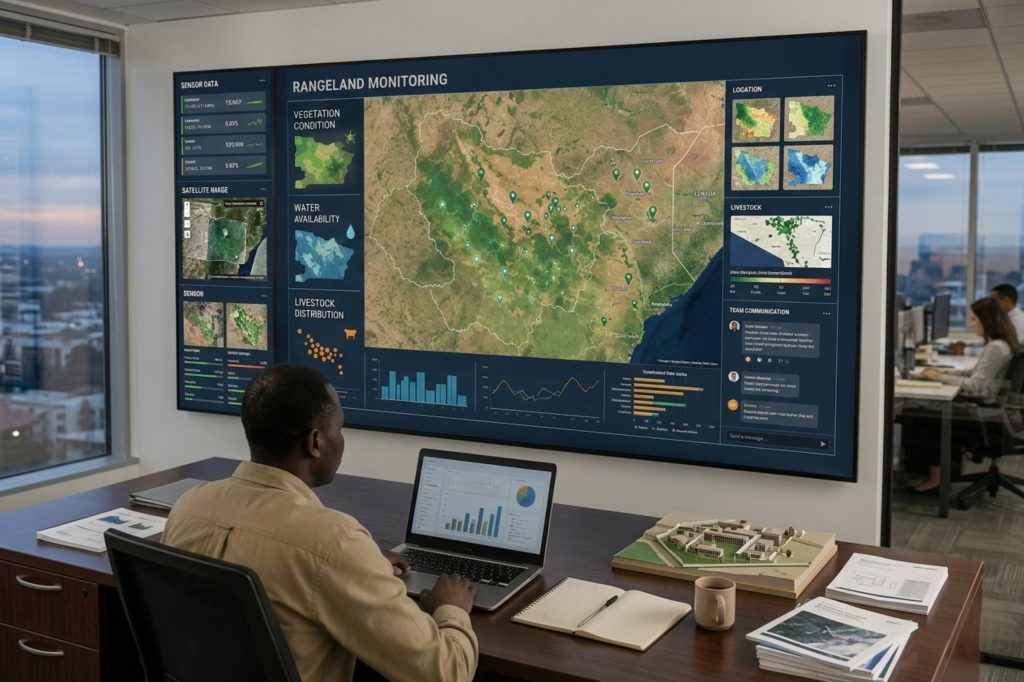
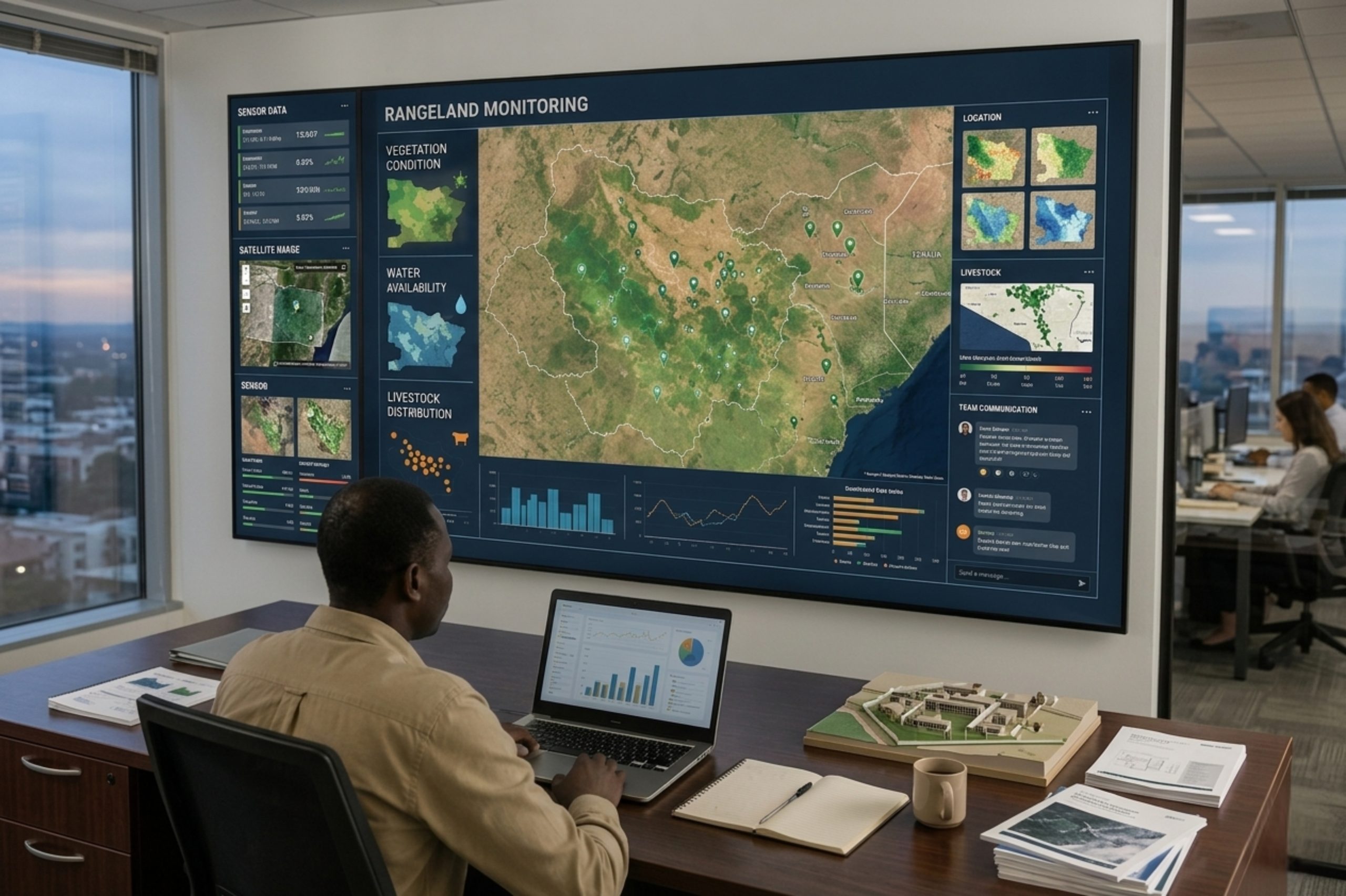
Another area of innovation attracting increasing attention is the use of satellite imagery, Earth observation technologies, and geospatial systems to monitor rangeland conditions.
Through these technologies, stakeholders can assess vegetation cover, monitor pasture availability, track drought impacts, and identify areas requiring restoration interventions.
Such information supports evidence-based decision-making by governments, development partners, and communities themselves.
In landscapes where mobility remains a critical adaptation strategy, access to reliable information on pasture and water availability can significantly improve planning and reduce pressure on fragile ecosystems.
Strengthening Community Voice Through Digital Platforms
This gathering also highlighted the growing importance of two-way information systems.
Modern digital platforms are increasingly moving beyond simply disseminating information to communities. They are creating opportunities for communities to share observations, report emerging risks, provide feedback, and contribute local knowledge.
This shift recognizes that resilience is strongest when scientific information and community knowledge work together.
Indigenous knowledge systems have long guided pastoralist decision-making. Digital innovations offer an opportunity to complement, rather than replace, these systems by creating stronger connections between local experience and scientific evidence.
Building Inclusive Digital Ecosystems
While digital technologies offer tremendous opportunities, participants also emphasized the need to address persistent barriers to access.
Challenges such as poor connectivity, limited digital literacy, language barriers, affordability, and unequal access to technology can prevent some groups from fully benefiting from digital services.
Women, youth, and marginalized populations must be intentionally included in the design and implementation of digital innovations to ensure that technological progress does not reinforce existing inequalities.
The success of digital innovation in the drylands will depend not only on technological sophistication but also on accessibility, trust, and relevance to local realities.
Innovations Driving Change Across the Drylands
The workshop showcased a growing ecosystem of digital innovations that are helping transform resilience-building and livelihoods across Kenya’s drylands and other pastoralist regions.
One of the highlighted platforms was HUSIKA by IGAD and ICPAC, a digital system designed to strengthen last-mile dissemination of weather and climate information services, early warning alerts, and community feedback mechanisms. The platform demonstrates how digital tools can support anticipatory action by ensuring that climate information reaches communities in a timely and actionable manner.
Another notable innovation was LivestockEx, a digital livestock marketing platform that is helping modernize livestock trade by connecting producers to markets, improving transparency, and providing real-time market information. Such innovations are helping pastoralist communities access better prices, reduce information asymmetries, and strengthen livestock-based livelihoods.
The workshop also highlighted the work of Justdiggit, which combines digital technologies, satellite monitoring, and landscape restoration approaches to support the restoration of degraded drylands. Through digital mapping and restoration tracking, such innovations are helping communities restore vegetation cover, improve water retention, and strengthen climate resilience.
Inforange by the Centre for Research and Development in Drylands (CRDD) demonstrated how localized digital systems can empower pastoralist communities by providing real-time updates on grazing conditions, livestock health, water availability, and rangeland resources. By strengthening information access, the platform supports better mobility planning and informed pastoralist decision-making in Northern Kenya and Namibia.
Another important innovation discussed was KAZNET by the International Livestock Research Institute (ILRI), a citizen-generated data platform that enables communities to report on drought conditions, forage availability, livestock health, water access, and emerging risks in real time. Such platforms strengthen two-way communication between communities, researchers, governments, and humanitarian actors while improving the accuracy and responsiveness of early warning systems.
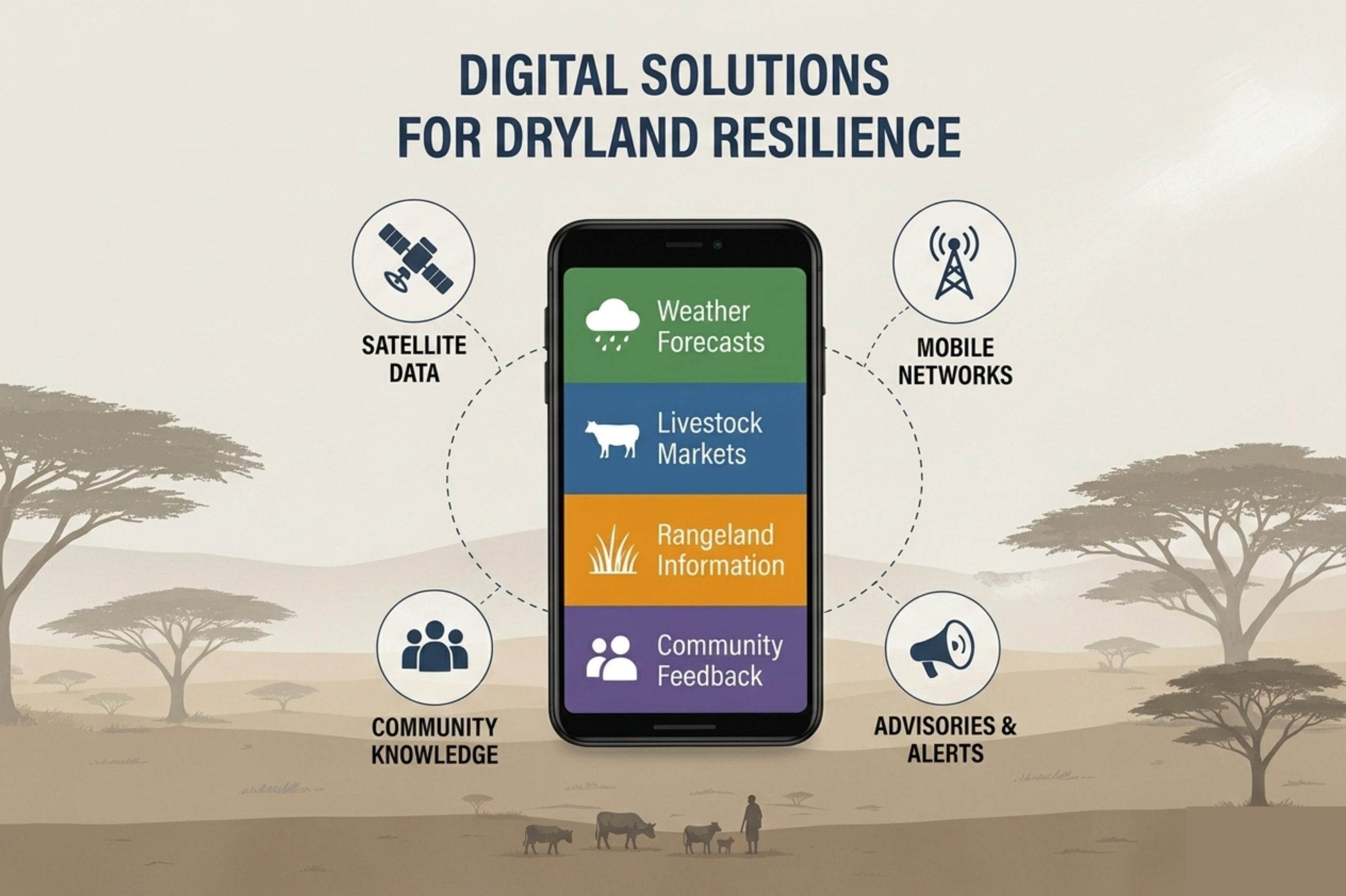
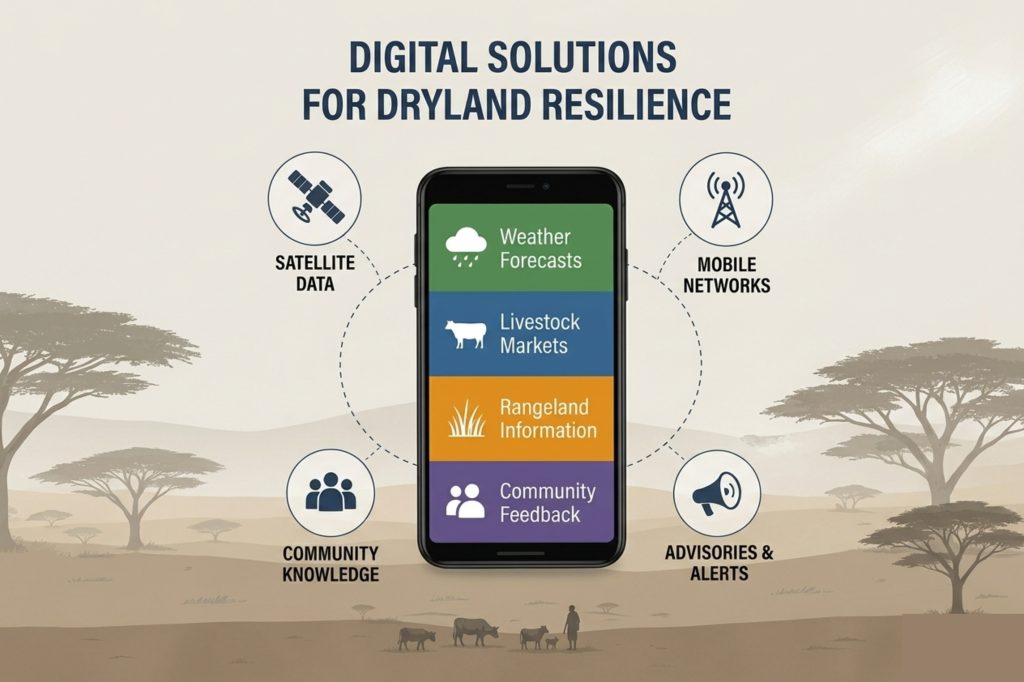
Collectively, these innovations demonstrate the growing shift toward data-driven resilience systems in the drylands. They also reveal the immense potential of combining weather and climate information services, market systems, Earth observation technologies, rangeland monitoring, restoration initiatives, and community-generated data into a more connected and collaborative digital ecosystem.
The Need for Collaboration
Many organizations have developed valuable digital tools addressing weather information, livestock markets, rangeland monitoring, early warning systems, and community feedback mechanisms. However, these systems often operate independently.
The future lies in building stronger connections between these innovations so that information flows seamlessly between institutions and ultimately reaches communities in a coordinated and actionable manner.
Effective collaboration among governments, research institutions, civil society organizations, private sector innovators, and pastoralist communities will be essential for maximizing the impact of digital investments.
A Digital Future for Drylands
The drylands are frequently portrayed through the lens of vulnerability. Yet the discussions in Naivasha revealed a different narrative; one of innovation, adaptation, and opportunity.
Digital technologies are helping transform how information is generated, shared, and used. They are supporting better climate adaptation, improving market access, strengthening governance, enhancing natural resource management, and creating new opportunities for resilience-building.
As investments in digital innovation continue to grow, the focus must remain on ensuring that these technologies are community-centered, inclusive, and responsive to the realities of dryland livelihoods.
The future of dryland development will not be defined by technology alone. It will be defined by how effectively technology empowers communities to make informed decisions, strengthen resilience, and shape their own pathways toward sustainable development.
The conversations emerging from the Digital Innovations and Information Systems Workshop underscore a growing consensus: information is becoming as important a resource as land, water, and livestock in the drylands.
When weather forecasts, market intelligence, rangeland monitoring data, and community knowledge are effectively connected and shared, they become powerful tools for resilience, adaptation, and economic transformation.
The challenge now is not merely to develop more digital solutions,but to ensure that existing innovations work together, reach the last mile, and remain accessible to the communities that need them most. By fostering collaboration, strengthening coordination, and placing communities at the center of innovation, digital technologies can become a catalyst for a more resilient and prosperous future for Kenya’s drylands.