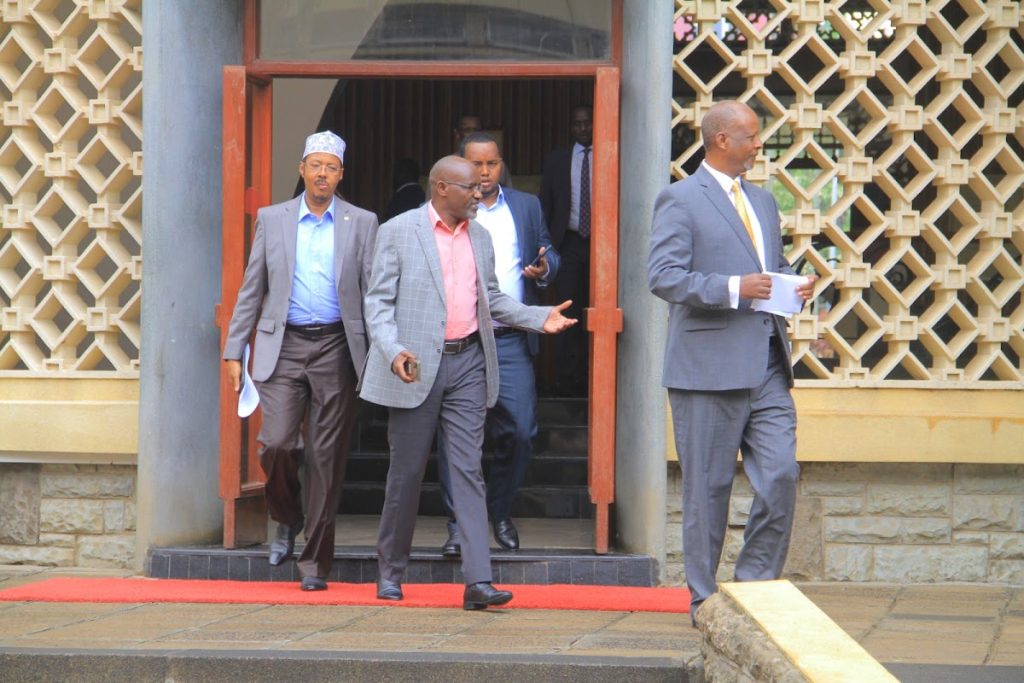
Explore our CEO’s Insights on Climate Change and Carbon Credits in Anticipation of the African Climate Summit.
Discover valuable perspectives as our CEO, Jarso Mokku, delves into the pressing matter of climate change and its correlation with carbon credits, offering insights that set the stage for the forthcoming African Climate Summit. Listen and watch to gain a deeper understanding of this critical discourse.
Shattered Mirrors: Piecing Together the Puzzle of Identity.
Article by Mahmud Muktar.
Three friends and an acquittance sit at a table in a restaurant. As expected, the pals are engaged in a lively conversation fluently speaking their ethnic language. The ‘new’ guy sits attentively attempting to find his footing amidst the lively chatter. He murmurs a comment and the rest of the table burst out laughing as if he said something funny but that was not the case. He knows this feeling all too well, he’s felt it before, and yet it is still as embarrassing as the first time it happened when he went to visit his relatives in Northern Kenya at the tender age of ten. He is not an introvert, far from it, he can easily relate and get along with others but just not in this setting, and especially conversing in his mother tongue. He always feels out of place.
This is the story of the sons and daughters of some if not most migrants be it from countries, counties, or even mere towns. There is a loss of touch with one’s roots which may lead to a sense of estrangement creating a need to belong somewhere, anywhere with no judgement and a place that allows one to be themselves. First-generation migrants have their fair share of struggles with their identity because they are expected to abide by their native culture and traditions which their parents grew up with even though they are brought up in different area codes altogether. Despite this, most parents try their best and succeed in instilling some aspects of their traditions but one of the most important and challenging tools is the natal language. Between working hours for parents and school hours for children, it takes a lot of sacrifice to ensure that kids learn and speak their native language, especially in big towns and cities.
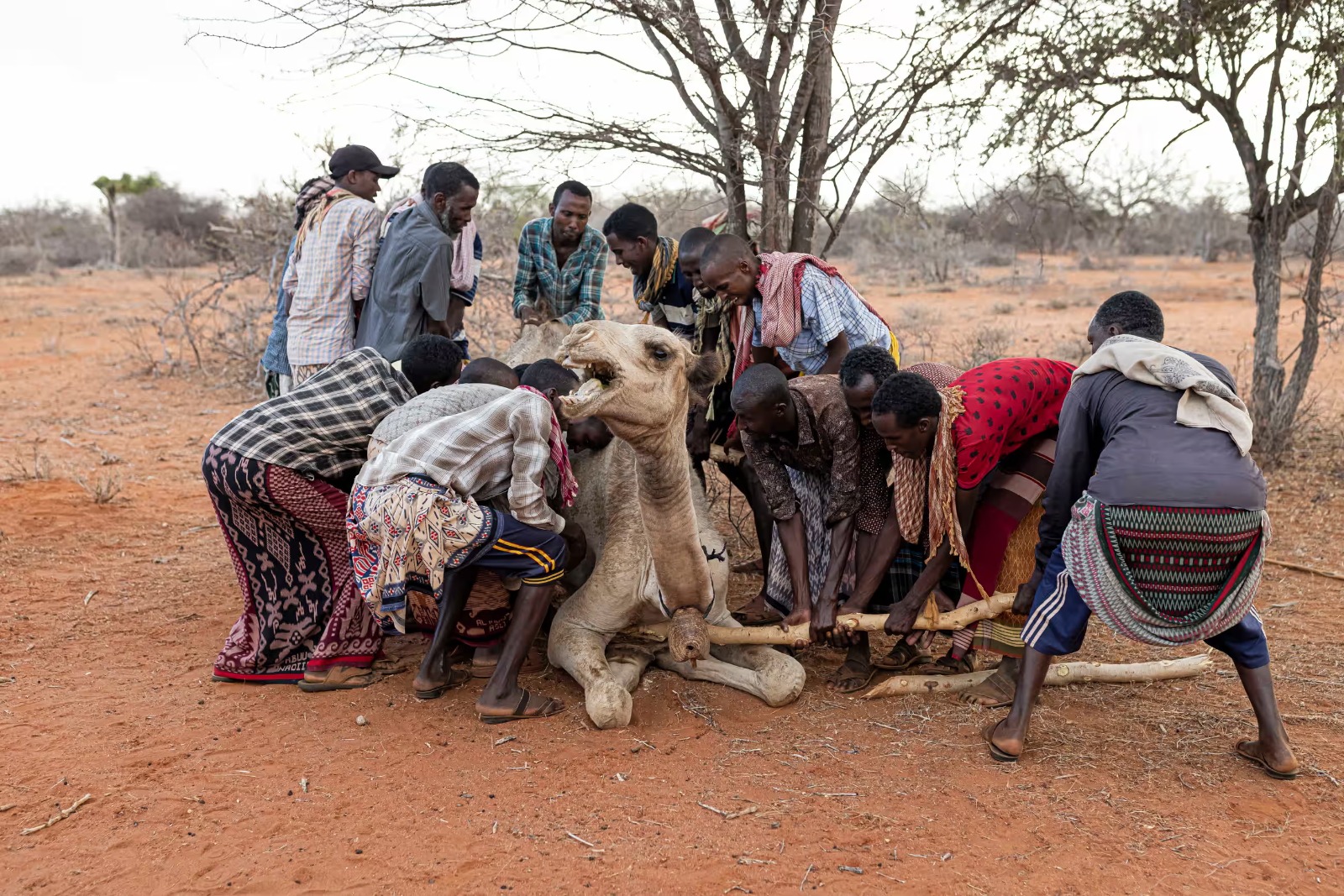
From the perspective of people from Kenya’s Dryland areas, the impact has been felt. A natural pastoralist community has cultures and traditions which resonate more with the environment. When first-generation migrants visit their indigenous people, they are viewed as outsiders and in turn, behave like tourists. Some would start taking snaps the first time they see a camel being slaughtered creating a divergence or disconnect between the locals and their young visitors.
Photograph by Patrick Meinhardt
The young visitors might have basic listening skills of their local language but often struggle to respond eloquently. In response, the locals come up with names for their young and ‘dumb’ visitors who don’t understand their language let alone their own culture. Names like ‘Ichakun’ by the Turkana community, ‘Tene’ by the Borana, ‘Kaure’ by Pokot and the well-known ‘sijuu/sijui’ by the Somali community are just a few examples of the nicknames given to first-generation migrants who cannot speak the language potently. These names are considered offensive and discriminatory by the individuals they are used to refer to. This brews a rift between the two parties and can end up creating resentment towards one’s ethnic group. Consequently, this could lead to one losing their identity and creating a need for acceptance away from their own kinsmen.
The real punch in the gut for the first-generation migrants and those who come after is when the stigma they face in their native communities follows them into the cities they reside in. Where strangers, acquittances, relatives or even their own parents might continue describing them using these derogatory names, looking down upon them as inferior people because they can’t speak their language and are not in tune with their heritage. Why would they expect them to be? These people have been brought up in a different environment (arguably with better living conditions because that was their parents’ goal for migrating), diverse communities and have a completely different view of the world. It’s unfair to impose the same cultural expectations on them, as they have developed their own distinct identity influenced by their experiences.
Sapir- Whorf Hypothesis from the movie ” Arrival”.
There is a very strong correlation between the language one speaks and how one sees everything according to the Sapir-Whorf hypothesis. The theory states that language does not just give people a way to express their thoughts – it influences and determines their thoughts (how they see the world). The gap between the haves and the have-nots in terms of vernacular proficiency could be understood by how these two groups view the world and their environs. The view in terms of relationships, entertainment, marriage, and religion will be different as this is determined by one’s language and environment.
The totality of one’s perception of self and how we view ourselves as individuals is one of the many ways of defining identity, and people from Kenya’s dryland areas are so proud of theirs. The best way to safeguard this identity in my opinion is by first not discriminating against our young generation who have not had the opportunity to find their identity because of their environmental constraints and to make them feel part of the community. There is also a huge responsibility on parents to understand how important the mother tongue is and how it could shape the reality of their children’s lives.
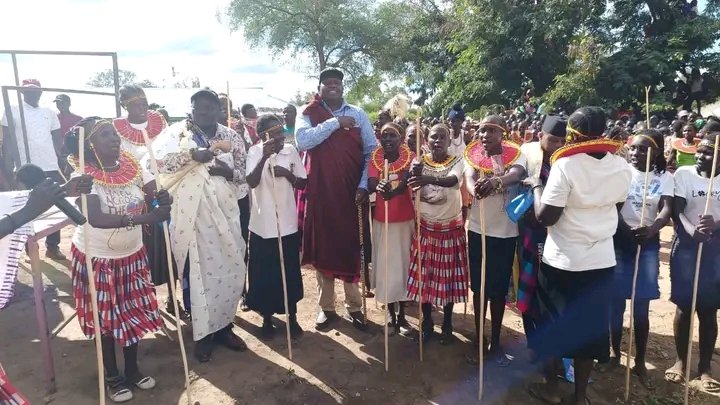
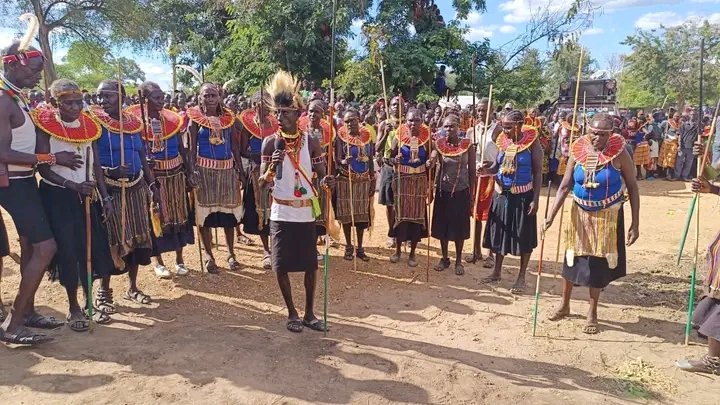
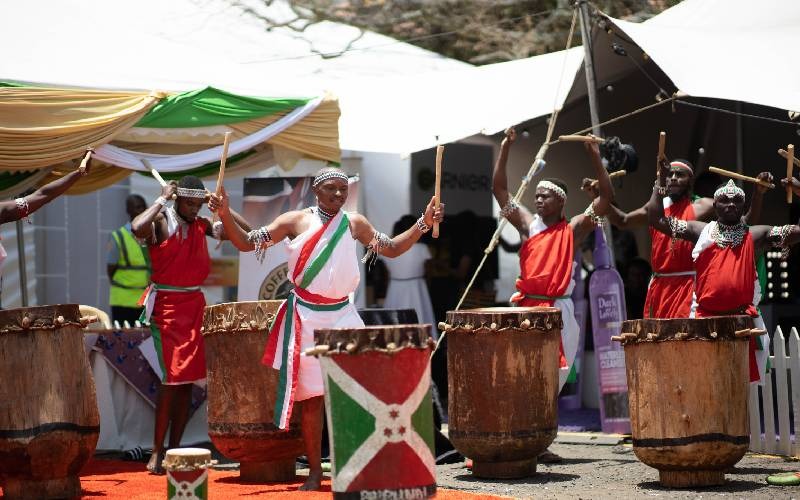
USIU Cultural Week 2021
Lastly, having cultural festivals which bring together people from the same ethnic tribes can be a powerful way to celebrate and preserve the richness of their culture and traditions. By beautifying the culture and tradition we can inspire the next generation’s interest and instill a sense of pride in their indigenous background, fostering a stronger sense of cohesion within the community.
USIU Cultural Week 2021
Navigating Paths of Peace: A North-Rift Tale
By Rayson Lotengan
Conflict in the Northern region Counties in Kenya has reached a stalemate where peace and security have become unfeasible to attain without military intervention. Despite leaders from the region and all Pastoralist Parliamentary Groups PPG leadership having peace meetings, nothing persuasive has been done to break the conflict stalemate in this region.
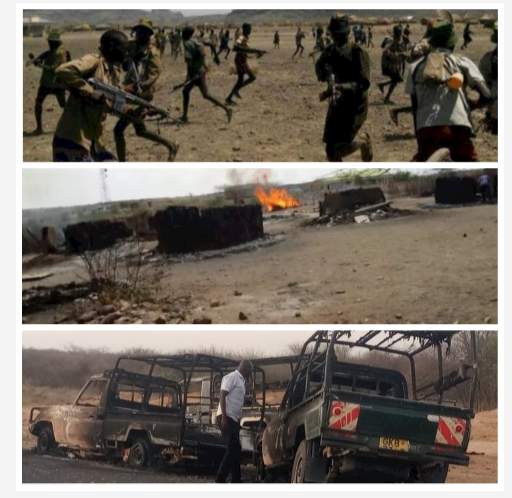
Police vehicles and houses torched by bandits. Photo: Courtesy
The conflict in the North Rift Counties is believed to be caused by inter-community fighting for minimal natural resources like water, grazing lands, and raids. However, in recent times the act of raiders towards each cannot be categorized as any of the above factors but an act of tribal terrorism.
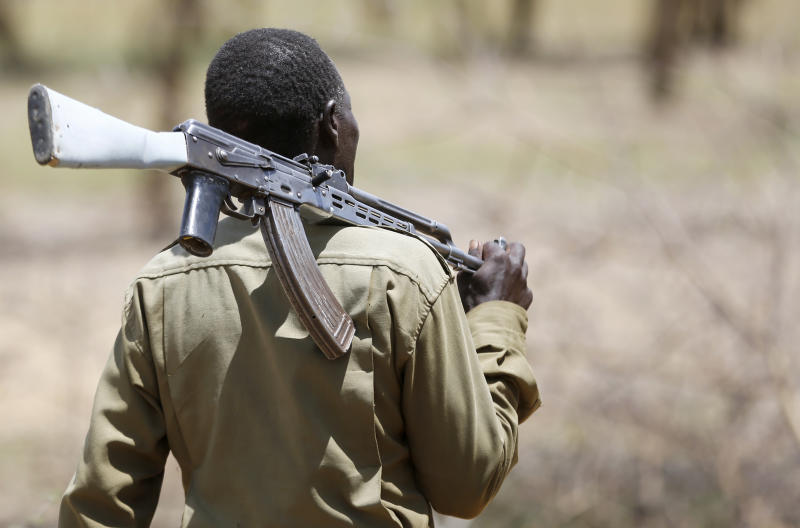
Illegal gun ownership and the lack of law enforcers in the region have made gun owners feel like heroes and impose their laws as they wish. Raids and terrorism have led to territorial claims and attempts to divide communities along tribal lines exacerbating the already fragile peace in the region.
Peace and security are the backbones of any progressive State. Without peace, there is no development. Globally, every state recruits military and intelligent personnel each year to ensure their citizens enjoy peaceful and workable territory. This includes States like the US, Russia, China, France, and Britain which employ Mutually Assured Destruction (MAD) weapons to deter potential threats from foreign aggressors. These states put a lot of resources into military and intelligent personnel to ensure their countries have long-lasting peace.
Understand that State instability is not caused by external aggression but by the internal conflict within the communities. For example, the Kenya Post Violence Elections 2007 was supposed to be a lesson to Kenyan leaders and citizens. However, the North Rift conflict is at its peak, despite the lessons learned in Kenya’s 2007/2008 Post Election Violence, the current conflict in the North Rift has not received the attention it deserves. The media’s coverage has been limited and even discussions in the parliament have failed to generate significant action. When a debate about the insecurity situation in the North Rift is brought to the chambers of the parliament many legislators oftentimes leave the chambers with the reason of feeling unbothered about the hostilities.
These conflicts are more dangerous to any Nation’s stability than any threat from foreign aggressors. Imagine a scenario where the state is trying to stop terrorism from overseas while we get bandits who terrorize citizens daily. The consequences of this indifference are dire with more than 20 lives being lost every day, impacting the Nation’s economy and social fabric.
To overcome biases and ensure effective peacebuilding, it is essential to involve all affected communities and genuinely consider their perspective without tribal preferences. Some of the recommendations for sorting this perennial problem once and for all include:
Local Driven initiative
The peace initiative should be a locally driven notion supported by neutral peace institutions and the National Government. The local elders from all conflicting communities should be facilitated to drive the peace implementation process in the region because these elders are not just ordinary people but are the face of their respective communities. These are the people whom their leaders believe when they comment about boundaries, the boundary conflict is originating from these people. Therefore, if the government and any other peace-implementing partners succeed in uniting the elders to drive the peace process, it will eliminate the idea of boundary conflict which is the main factor that brings tension.
Elders’ unity will break a conflict stalemate since the peace notion will be based more on interpersonal relationships, this will pave the way for long-term peace rather than political class interventions that depend on the relationships of politicians with constituents. A personal relationship is better than focusing on the comfort zone of political leaders because what happens if it will not conform to their expectations?
An armed man spotted in the North Rift. Photo: The Standard
Strengthening of Law enforcement
Establishing and Operationalizing a Military camp and a police post in the region is essential to maintain law and order. Criminal elements exploiting the conflict must be identified and dealt with promptly as they use conflict to terrorize other communities ensuring there is no tranquillity. To identify those criminals’ the police and military must involve the elders in the investigations and that is why the elders’ unity is very paramount to the operation.
Promoting Economic Integration
Lastly, the government and other implementing partners should intently create a thriving business town that will help in bringing together the conflicting communities. Encouraging business activities and trade among different groups can foster co-existence and reduce animosity, paving the way for sustainable peace. This will also be a business destination for many local communities around the region.
The above recommendations are interdependent with each other because it’s impossible to attain peace without unity among elders which extends to the community. Effective law enforcement involving the military, police operations, patrols, and economic integration is key. The government, peace institutions, civil society, and all stakeholders must join hands to achieve this goal. Only through genuine collaboration and understanding can the North Rift break free from its conflict stalemate and pave the way for a future of lasting peace and prosperity.
Taking Pastoralist Voices Global!
By Wario Malicha
A pastoralist leads his cattle home. Photo: Courtesy
For close to 50 years or so, pastoral policy development across the Horn of Africa has been riding on the wave of illusion premised on the move that experts and development practitioners are the best adjudicators of any pastoral well-being. They organize short field assignments to get an impressionistic view of rural lives and livelihoods, when the weather is most pleasant and get back to the high-end office, spin that comfy chair and examine the instruments to derive the finding that will be used for recipients that were never part of the project from the inception.
This development tourisms adds to the complacency by providing a snapshot of ‘better-off’ dusty thatched houses in the villages. Such an approach presumes people as mere objects of development and adopt a ‘blueprint’ to the issues concerned. The crux of development is transformation of quality of standards including better quality of life, being free from hunger and disease, food security and state of being happy, as explained in Sen’s Capability Approach by Amartya.
A pastoralist taking care of his livestock.
In the research for reality and valuable policy approach to the lives of the pastoralist and their future generations, and being the youngster who knows the value of pastoralism by taking care of herds and knowing its commercial and inheritance value, I have come to my conscious that voice of the pastoralists should be brought to the global stage. It should not be through images of herders taking care of their livestock in their tradition attires but rather through co-creation. Shifting from definition of pastoralists are being retrograde and unschooled [yet all those PhD fellows and scientist derived knowledge from them to publish a working paper or policy/ evidence brief] to being vehicle that will be used to cross poverty line.
Co-creation
The perception of pastoralists can be revealed and understood through co-creation, closely linked to participatory epidemiology, to:
Consider indigenous knowledge system as antidote to challenges in drylands. Long before the reality of contemporary development model and flow of aid, pastoralist community face those challenges, however they maybe of lesser magnitude, had own way and resource of overcoming those issues, perhaps, more profound that the present-day approach that is accompanied by multibillion dollar scheme sand investments in the Horn. Just because the stomach is empty it does not mean that the brain is dead. There are reserve in the brain for local knowledge imprinted.
“The voices of the pastoralists should be brought to the global stage through co-creation.”
Make pastoral communities involved in pursuit of their own lives and livelihood. There is no way you can describe the initiatives that has been designed in high-end apartment as being participatory. Discounting the very recipient of the project should be treated as ‘development transgression’ and that is why it is difficult to put the development partners to visibly account for the dollar spent in dryland. Be part of the voice that brought you to self actualization!!
Wario Malicha is a social development expert and research consultant. He holds Advanced Masters of Science in Governance and Development from Institute of Development Policy, University of Antwerp, Belgium. His is a development practitioner and research consultant with over 8 years of experience in Northern Kenya and Southern Ethiopia on conflict, natural resource management, and climate change adaptation.
He has worked with the United Nations and led drylands management projects at regional, national and local level including tracking policy development at the Kenya Institute for Public Policy Research and Analysis (KIPPRA), assessing impact of social policy in Northern Kenya, mapping stakeholders in the livelihood and resource management, among others. Wario understands pastoral livelihoods, policy research processes, social evaluations, and project management at local, national, and regional levels.
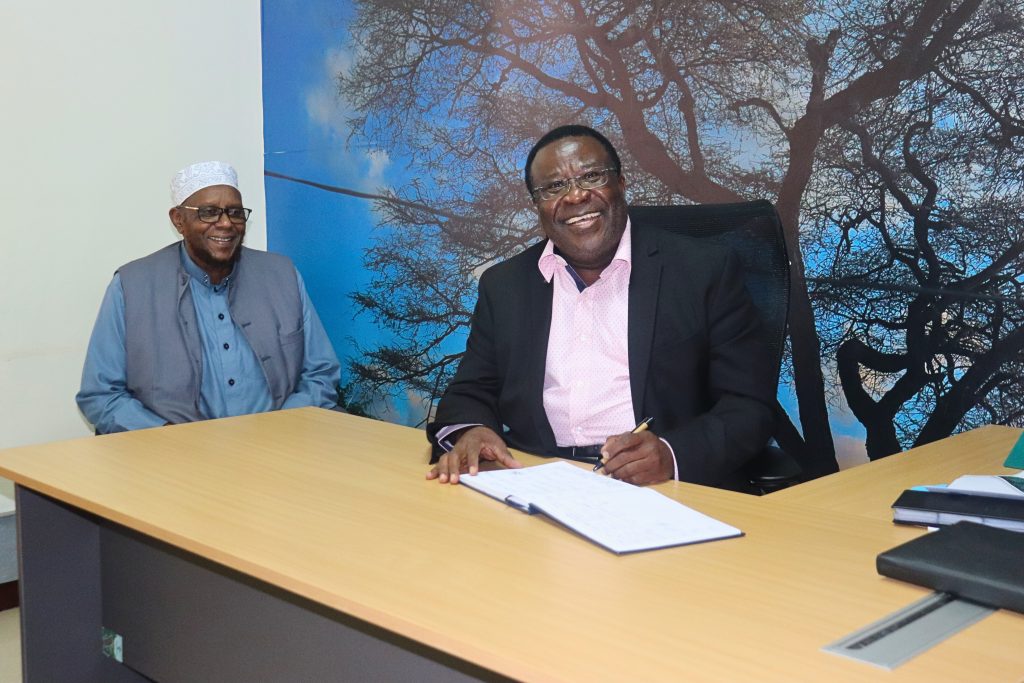
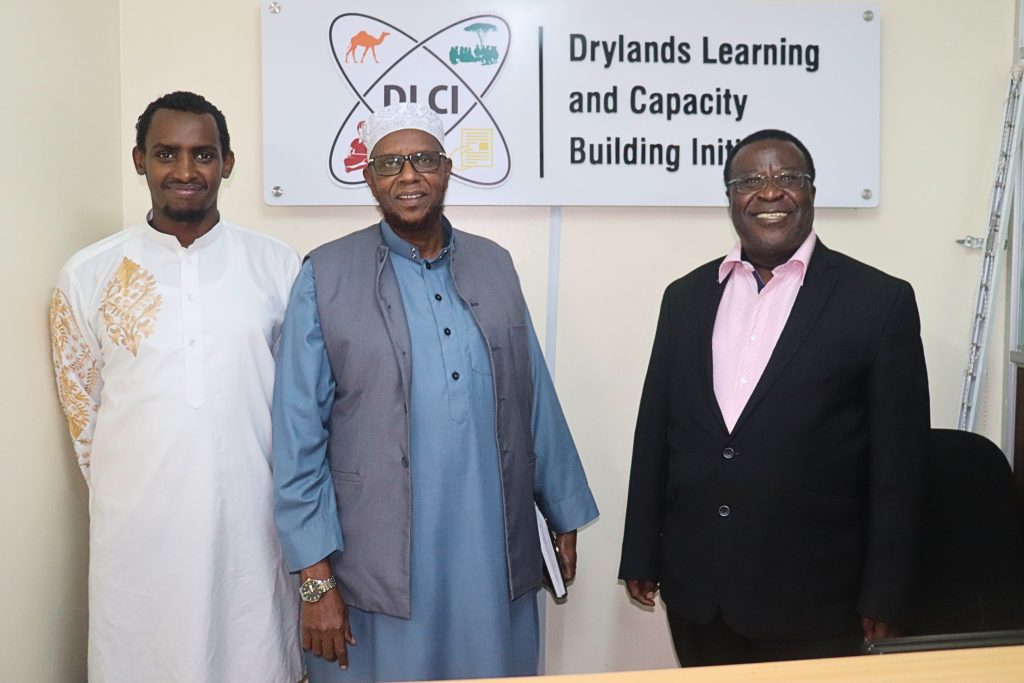
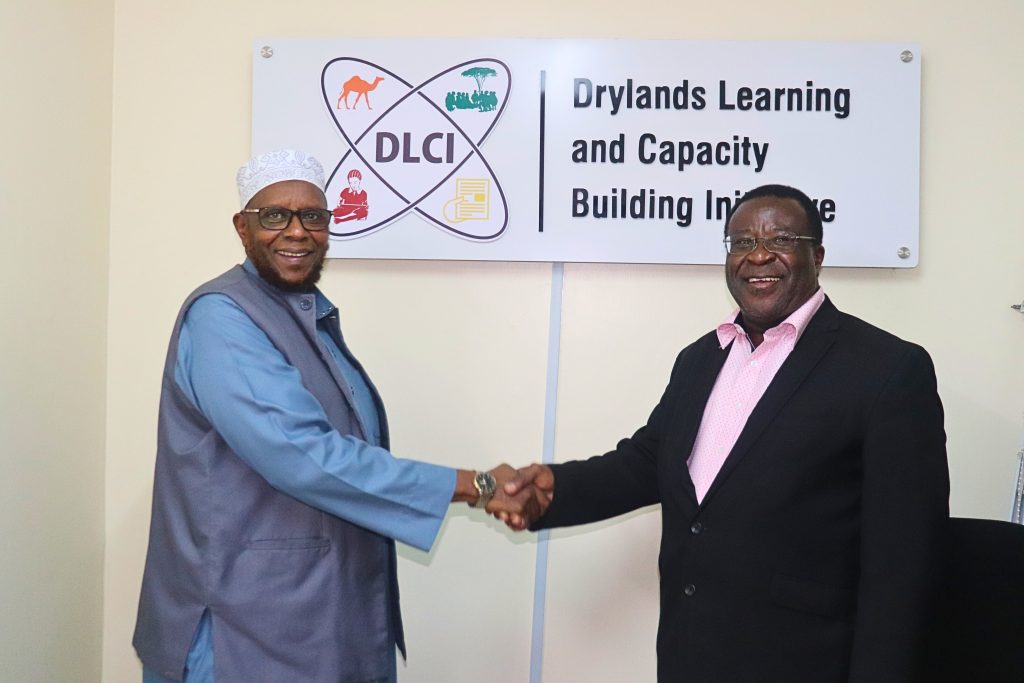
Hon Ekwe Ethuro, PPG’s Founding Member visits DLCI
By Hillary Kitel
DLCI was honoured to receive a courtesy call from Hon RT Ekwe David Ethuro, EGH, CBS, a distinguished guest and a founding member of the Pastoralist Parliamentary Group PPG.
Hon Ethuro, in addition to being a founding member of this important organization, also holds the title of Emeritus Speaker of the Senate of Kenya, Member of Parliament for Turkana Central Constituency, and former Chairman of the Speakers’ Forum of Kenya.
His visit provided us with valuable insights and an opportunity to strengthen our collaboration towards the empowerment and development of pastoralist communities.
We appreciate Mr. Ethuro’s presence and his dedication to advancing the rights and well-being of marginalized groups.
Mobile Pastoralism: How It Can Mitigate the Climate Change Menace
By Hillary Kitel.
Mobile pastoralism, also known as transhumance, is a seasonal movement of livestock between different pastures. It is a traditional practice that has been used for centuries by pastoralist communities around the world. It is a system that offers numerous benefits and plays a vital role in addressing climate change.
Here are some ways in which mobile pastoralism can contribute to climate change mitigation and adaptation:
Sustainable Land Management: Pastoralists rely on extensive grazing systems, allowing livestock to graze on large areas of land for shorter periods. This rotational grazing helps prevent overgrazing, promotes biodiversity, and allows vegetation to regenerate, enhancing the resilience of ecosystems in arid and semi-arid regions.
Carbon Sequestration: Pastoralist landscapes, with their diverse vegetation cover, can act as carbon sinks, absorbing and storing significant amounts of carbon dioxide from the atmosphere. The careful management of grazing patterns and vegetation dynamics by mobile pastoralists can contribute to carbon sequestration, reducing greenhouse gas emissions.
Resilience to Climate Change: Mobile pastoralism is inherently adaptable to changing climatic conditions. Pastoralists have developed knowledge and strategies to cope with variable weather patterns, such as droughts or floods. Their mobility allows them to access different grazing areas, ensuring the survival of their livestock during extreme climatic events.
Biodiversity Conservation: Pastoralist practices contribute to the preservation of biodiversity by maintaining diverse grassland ecosystems. The mobility of pastoralists prevents the dominance of certain plant species and allows for the coexistence of a wide range of plant and animal species, promoting ecological balance and protecting endangered species.
Cultural Preservation: Mobile pastoralism is deeply rooted in the cultural identity of many communities. By supporting mobile pastoralism, we not only protect valuable ecosystems but also preserve unique cultural traditions, knowledge systems, and social structures that have sustained generations of pastoralists.
Embracing and supporting mobile pastoralism can have positive impacts on climate change mitigation, biodiversity conservation, and the livelihoods of pastoral communities. Recognizing its value and implementing policies that empower and support pastoralists are crucial steps toward a more sustainable and resilient future.
Photo Credit: REUTERS/Thomas Mukoya
West Pokot leaders want more funds to improve education in the county.
Lack of infrastructural Development and learning facilities affecting education in Pastoral areas.
ARTICLE BY OSCAR KAKAI | NTV KENYA.
A concern has been raised over lack of infrastructural development and learning facilities in schools in remote, pastoral areas in Kerio Valley region.
It has been established that many learners in West Pokot County still learn under trees because of the lack of classrooms. Some schools in the region were vandalized by bandits.
Residents and area leaders who cited insecurity as the main cause contributing to poor education standards in the semi-arid region now want more resources and funds to improve education in schools and rehabilitate learning institutions that were destroyed by bandits within the region.
They are now calling on the government through the ministry of education to put more funds for infrastructure development in schools in remote pastoral areas to improve education and help spur development in the region.
They claimed that there exists biases in distribution of the funds in primary and secondary schools and across the Country.
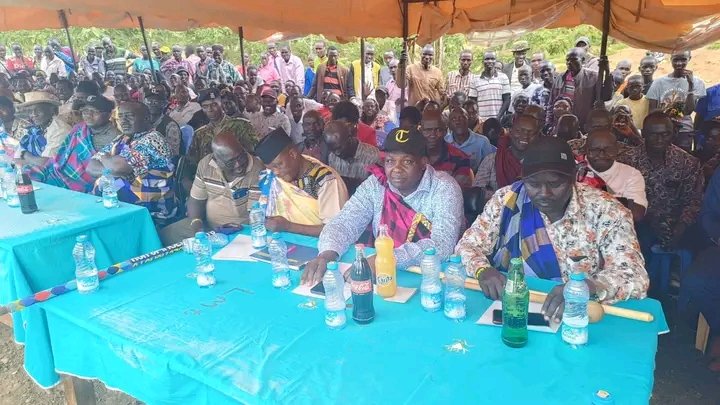
Sigor Constituency MP and PPG Organizing Secretary, Hon Peter Lochakapong seated between Kapenguria Mp Hon. Samuel Moroto and Lomut MCA Jacob Toungole.
Sigor MP Peter Lochakapong and his Kapenguria Counterpart Samuel Moroto called for an affirmative action in education by putting more resources and improving infrastructure in schools along County borders to help learners in the region access education.
They called on the government to create clear policy in giving out the funds.
Speaking on Saturday at Lomut Primary school during the launch of the new school courtesy of the Sigor Constituency Development Fund[CDF] residents and leaders said that schools along the borders are in deplorable conditions and learners take their studies in poor learning environments and inadequate infrastructure and facilities.
The leaders said that this will help curb insecurity in volatile areas to promote education and help curb insecurity.
“We want equality in giving out the funds. Many children drop out of school because of lack of facilities and hence migrate with their parents in search of pasture and water,” Lochakapong said.
Lochakapong who expressed his desire to help alleviate the challenges that pupils face at school through the support of area leaders and County government said there is need to promote education in interior areas which used to experience insecurity hence were marginalized.
“This area pastoral areas that were marginalized and we need more infrastructural funds because our children needs to access quality education .This is one of the best school and the second primary school to get a bus in such like a remote area .It will ease movement for learners,” Lochakapong said.
The legislator pointed out that some schools have not been opened due to insecurity.
Sigor constituency MP Hon. Peter Lochakapong with his constituents.
“We need more security officers to man the schools. We need schools that were destroyed along the county borders to be reconstructed. The construction of Chesegon Technical Training College[TTI] stopped due to insecurity,” he said.
“Education is the only tool for development that can change the region. We need our children to go to school so that we can compete with other communities.”.
He called on the government to beef up security in border schools affected by insecurity.
“Learners and teachers staying in fear due to attacks,” he said.
Moroto said that it is hard for the County to compete with other Counties because of the many challenges.
‘It is wrong for some areas to get the infrastructure funds but others left out. The President promised to set up three boarding primary schools along the West Pokot and Turkana border for learners from the two communities to learn together,”he said.
Phillip Yarapong, a resident, said that learners walk for more than four kilometers to school.
Traditional Pokot Dancers performing at the ceremony.
“When Lomut River overflows during heavy downpour, children get difficulties crossing it. We prefer them to be borders but there is a challenge of food. Children of four classes learn under trees in Chepser primary school,” he said.
Lomut Acting Chief Yohana Loritai noted that learners in the region have embraced education but schools have no classrooms.
“Lomut primary has many learners and we need three more schools. In Kapsesis,Pelet, Chim and Purongan schools children learn under trees,” he said.
Christine Lokotan, a resident of Chesegon noted that many learners learn under trees and hence learning is affected.
“They have difficulties during rainfall seasons and have no desks because they sit on stones,” she said.
Article originally published by NTV Kenya.
MPs from pastoralist communities have rallied behind Haji, warn against politicizing his nomination
Pastoralist Parliamentary Group (PPG) patron Hon. Col (RTD). Dido Rasso Ali with PPG members.
DPP Noordin Haji is set to face a parliamentary vetting panel as he seeks to become the country’s next spy chief.
by LUKE AWICH and AND JULIUS OTIENO
The National Intelligence Service (NIS) Director-General nominee will appear before National Assembly’s Defense, Intelligence and Foreign Relations Committee for vetting on Tuesday.
The Belgut MP Nelson Koech-led panel will vet the nominee at 2pm at Parliament Buildings in Nairobi.
The committee will be expected to table its report for either approval or rejection once the House resumes sittings on June 6.
President William Ruto nominated Haji in May 16 to succeed Philip Kameru.
Kameru heads into retirement after serving his final second following the renewal of his contract by retired President Uhuru Kenyatta in 2019.
If approved by the committee and endorsed by the House, Haji will be going back to head the agency he understands better.
Former Uhuru Kenyatta picked Haji from NIS to become the country’s second Director of Public Prosecutions under the 2010 Constitution.
Haji previously served at NIS as the Deputy Director of the Counter-Organised Crime Unit within the National Intelligence Service.
Meanwhile, MPs from pastoralist communities on Monday rallied behind Haji for the country’s spymaster job.
The lawmakers accuse a section of civil society of laying roadblocks on the path of Haji.
Led by Saku MP Dido Rasso, the MPs warned against politicisation of Haji’s nomination saying he does not only have the requisite academic qualification, but is also an insider who has worked in the national intelligence circles.
The Star has established that a number of civil societies have written memorandum against Haji’s nomination.
In a notice, Clerk of the National Assembly Samuel Njoroge gave the public up to May 29 to submit any memorandum they may have. This was to be done by way of written statements on oath (affidavits), with supporting evidence contesting the suitability of the nominee for appointment as the Director General, National Intelligence Service.
According to the MPs, the numerous petitions by the civil society is a clear indication that they want to sway the opinions of MPs against Noordin ahead of the approval hearing.
Haji’s vetting comes at a time a number of civil societies have petitioned the Public Service Commission seeking his removal as the DPP over the recent withdrawal of high-profile cases involving senior government officials.
Transparency International even went further to recall Leadership Integrity Award handed to him in 2019.
Addressing a press conference at Parliament Buildings, the lawmakers termed the action of the civil societies ill-intentioned and that which is meant to pleas e external interests.
“Our attention has been drawn to what appears to be civil society instigated campaign to malign Mr Noordin’s character or sway opinions of Members of Parliament against Mr Noordin ahead of this critical parliamentary process,” Rasso said.
“We therefore caution anyone with ill-intentions of maligning Mr Noordin’s character ahead of vetting and approval hearing by Parliament, that they are too late.”
Eldas MP Adan Keynan wondered why the petitions are coming up immediately after nomination of Haji.
Video credits : Citizen TV Kenya.
“We know the dynamics of this country and we know this is politics. And this is why we are asking why the hullabaloo now at this very stage, why didn’t they raise these questions when he served as DPP. Noordin is a very clean man and as of now he has done nothing wrong,” he said.
Haji is the son of the late former Defence minister Yusuf Haji.
He holds a Bachelor of Law and Master’s degree from the University of Wales, Cardiff.
Additionally, he holds a second Master’s Degree in National Security Policy with Merit (MNSPO) from the Australian National University.
Haji was admitted to the Bar in 1999 and thereafter joined the Public Service in January 2000, working at the Attorney General’s Office.
In December 2012, Haji was awarded the Order of the Grand Warrior of Kenya (OGW) following devotion to public service.
Originally Published by The Star Kenya.
Video by Citizen TV Kenya
NB: DLCI is the secretariat to the Pastoralist Parliamentary Group PPG.
Peace & Security Meeting Between Turkana and Karamoja.
By Hillary Kitel.
A two-day peace meeting between leaders from Turkana West and Karamoja leaders was held at the Ato Rites Resort in Kakuma town from May 18th and May 19th 2023. The meeting brought together representatives from Uganda’s Karamoja region and Turkana West Constituency and was facilitated by Drylands Learning and Capacity Building Initiatives (DLCI) in partnership with International Alert (IA).
Leaders from Turkana West constituency together with the delegation from Uganda’s Karamoja region
The event was hosted by Hon. Daniel Epuyo Nanok, MP Turkana West and doubles up as the Vice Chair of the Pastoralist Parliament Group (PPG). The meeting saw the attendance of senior politicians from Uganda’s Karamoja region, including elected and nominated leaders from Kotido, Kaabong, and Karenga districts, as well as all political leaders from the Turkana West constituency.
Turkana West Constituency MP & PPG Vice Chair Hon. Daniel Nanok Epuyo addressing Kraal Elders in the Meeting
The Ugandan delegation comprised 26 people’s representatives, including Members of Parliament, District Chairpersons, the Resident District Commissioner (RDC), District Councilors, Women Peace Forum, LC3s, and Kraal elders led by Hon. Rose Lilly Akello, Women Member of Parliament (WMP) for Karenga District and State Minister of Ethics and Integrity in the Office of the President.
Hon. Rose Lilly Akello, Women Member of Parliament (WMP) for Karenga District and State Minister of Ethics and Integrity in the Office of the President, Uganda.
The Turkana West delegation led by Hon. Daniel Epuyo Nanok saw Hon. John Munyes, former area MP and Senator of Turkana County, and former Cabinet Secretary of Petroleum and Mining, along with ten Members of Turkana County Assembly including the Deputy Speaker attend the high profile meeting.
Hon. John Munyes, former area MP and Senator of Turkana County, and former Cabinet Secretary of Petroleum and Mining
During the meeting, a situational analysis revealed that over the past ten years, there has been relative cross-border peace and harmony. The attendees acknowledged the role played by Kenyan NGOs, particularly Lotus Kenya Action Development Organization (LOKADO), in facilitating cross-border peace-building efforts. However, there was concern expressed about the cessation of previous successful inter-community border peace meetings and leadership engagement. It was emphasized that the Turkana and Karamojong communities are one people, known as Ateker, sharing a common language and culture. Both communities celebrate their cultural festivals across the border at different times.
Delegates following along Lotus Kenya Action Development Organization (LOKADO) CEO’s Augustine Kai Presentation .
The ongoing violence and conflicts among the Ateker families were deemed unjustifiable. A significant difference was noted in the governance systems between Kenya and Uganda. The participants expressed that the Ugandan government has successfully eliminated illegal firearms from civilian possession through comprehensive disarmament in the Karamoja region. However, in Kenya, there is a proliferation of unregulated illegal firearms among civilians. The meeting highlighted that no community in Uganda is collectively armed, while there are reports of widespread cattle rustling and the presence of armed Turkana people in Kenya. This situation has negatively impacted the lives and livelihoods of communities in Uganda, particularly during the dry season when Turkana pastoralists cross the border with large numbers of livestock in search of water and pasture. Disturbingly, there has been an increase in raiding of unarmed villages, livestock theft, killings, sexual violence, property destruction, and displacement of people in the border areas between March and May 2023.
Ugandan Kraal Elder passionately expressing his disgust in the recent attacks.
The existing border agreements between communities have broken down, leading to heightened tensions and insecurity. Innocent boda-boda riders near the border have also become targets of attacks. The Uganda delegation presented data on livestock losses, (Karenga District, 1393 cows, 3,750 goats and 1,213 sheep. In Kaabong District, 2,081 cows, 4,096 sheep & goats and 203 donkeys. In Kotido District 2,500 cows) Illustrating the urgent need for Kenya to address the issue of stolen livestock from Ugandan communities.
The meeting proposed several solutions to address the challenges at hand. These included adopting an all-inclusive approach to sustaining peace between the Turkana and Karamojong people, enhancing communication between security agencies and political leaders across the border, and conducting regular cross-border meetings involving leaders, security agents, and communities.
Turkana Kraal Elders listening on.
It was emphasized that women and youth must be actively involved in peace-building efforts. Additionally, there was a call for robust border protocols to regulate the movement of animals and individuals across the border, with collaboration between the governments of Kenya and Uganda to acquire appropriate technologies for monitoring such movements.
Drylands Learning and Capacity Building Initiative ( DLCI) CEO Mr. Jarso Mokku facilitating the proceedings.
The meeting concluded with a strong emphasis on promoting mutual respect for state laws between the two countries. It was highlighted that no civilian should be allowed into Uganda with illegal firearms, and advocacy efforts were urged for the Kenyan government to remove all illegal firearms from the hands of civilians. The discussions held during this meeting served as an essential platform for addressing critical issues affecting the Turkana and Karamojong communities, aiming to restore peace, security, and cooperation among the Ateker people.
Turkana West and Karamoja Leaders addressing the media.
#SautizaUtu Linking and Learning event video
DLCI hosted an outstanding annual Linking & Learning event dubbed #SautizaUtu in Watamu, Kilifi County last month. Take a look at how the #WatamuEdition went down here!!


 These conflicts are more dangerous to any Nation’s stability than any threat from foreign aggressors. Imagine a scenario where the state is trying to stop terrorism from overseas while we get bandits who terrorize citizens daily. The consequences of this indifference are dire with more than 20 lives being lost every day, impacting the Nation’s economy and social fabric.


 Wario Malicha is a social development expert and research consultant. He holds Advanced Masters of Science in Governance and Development from Institute of Development Policy, University of Antwerp, Belgium. His is a development practitioner and research consultant with over 8 years of experience in Northern Kenya and Southern Ethiopia on conflict, natural resource management, and climate change adaptation.