A New Dawn for Indigenous-led Nature Finance: The Southern Kenya Indigenous Leaders Nature Meet

DLCI was established in 2016 with a vision that dryland communities in Kenya are empowered and at the center of resilience and development interventions. It serves 15 counties encompassing 64 parliamentary constituencies and over 10 million people, promoting dryland-friendly policies and accumulating extensive indigenous knowledge

On April 26, 2025, a historic chapter in conservation unfolded at the heart of the Kitengela-Kipeto Conservation Area. Indigenous leaders, landowners, conservation champions, and partners gathered for the Southern Kenya Indigenous Leaders Nature Meet, a landmark celebration of community-led stewardship and a breakthrough moment in nature finance.

Earth Acre CEO, Mr. Viraj Sikand celebrating with Maasai indigenous community members

Invited by EarthAcre under the Nature Transformation Fund, DLCI’s delegation joined the Southern Kenya Indigenous Leaders Nature Meet on April 26, 2025, in the Kitengela‑Kipeto Conservation Area. This participation highlighted DLCI’s role in advocating for direct, transparent, nature-based finance mechanisms that reward community stewardship.

Supported by MAS Holdings, Klarna/Milkywire’s Nature Transformation Fund, Africa Natural Capital Alliance (ANCA), and the African Fund for Endangered Wildlife (AFEW), the event marked the first-ever direct cash transfer payments to indigenous landowners for conservation. It was a bold step forward, overcoming long-standing challenges of payment transparency and land tenure complexities and recognizing the communities that have faithfully protected wildlife outside national parks.


The day opened with vibrant entertainment from the Maa community, a heartfelt prayer, and welcoming remarks from the Empakasi village chief. The principal secretary for the State Department of Wildlife, Ms. Silvia Museiya, ,who served as Guest of Honor, stressed the importance of involving local communities in decision-making, especially with the ongoing review of Kenya’s Wildlife Economy Law. She encouraged deeper partnerships between development partners and local stakeholders to drive inclusive conservation.

Principal Secretary for the State Department for Wildlife Silvia Museiya giving her remarks as the chief guest

A highlight of the day was the Tri-Annual Lease Payment Ceremony, where landowners from the Kitengela Conservation Area received direct lease payments. These payments acknowledged not just land ownership but also the deep indigenous knowledge of biodiversity and the commitment to conservation.

Earth Acre is working closely with landowners to ensure that natural assets are well taken care of, providing a sustainable path for long-term conservation efforts.

East African Carbon and Biodiversity Limited (ECBL) is an indigenous-led company representing different communities across three counties. Legalized under Kenyan law, it is recognized as a local project proponent and a leader in carbon and biodiversity initiatives. Their work with local communities is helping to develop nature-based assets and sustainable conservation strategies.

members if the indigenous maasai community celebrating the event

A community elder used a powerful analogy — likening nature assets to cows: “The better you care for them, the more milk they give.” This underscored how investing in conservation yields diverse benefits, from lease income and biodiversity credits to stronger pastoralism and eco-tourism.

Elders emphasized that real success lies in genuinely involving those who live with wildlife daily, not just during project rollouts but in leadership and planning. The event closed with the awarding of gifts, followed by a photo session, where the landowners proudly posed with their cheques. A shared lunch then marked the end of a day that celebrated both the history and future of community-led conservation.

Confronting Online Harassment: The Challenges Facing Women Journalists in Africa

JoanLettingBy Joan letting.

Read my journey: https://lnkd.in/deCYvwpZ


I started my career in journalism; I saw firsthand the power of storytelling and the risks that come with it.

Women journalists globally and in Africa are not just reporting the news; they are often the news themselves. Sometimes they are caught in a storm of online violence, threats, and harassment simply for doing their jobs.

Take Purity Mwambia, a Kenyan investigative journalist who uncovered the chilling reality of rogue police. Instead of being celebrated for her work, she was forced into exile after relentless online attacks and threats against her life. Her story is not unique; countless women journalists in Kenya, Rwanda, and Nigeria face digital abuse meant to silence them.

This crisis is at the heart of my PhD research at Simon Fraser University. I am exploring how social media has become both a tool and a weapon, a space where women journalists can raise their voices but also where they are brutally attacked. How does this impact press freedom? What policies can protect them? And how do we reclaim digital spaces for truth-tellers?

I am honored to be featured by Simon Fraser University Graduate Studies as I dive into these urgent questions.

Reflections on the International Funders for Indigenous Peoples Conference (IFIP) 2025

Reflection on the first IFIP Global Conference at Enashipai Resort, Naivasha, Kenya.

By Jarso Mokku, Chief Executive Officer – CEO, DLCI.

The Drylands Learning and Capacity Building Initiative (DLCI) is a non-governmental organisation established and led by Indigenous peoples from Kenya’s drylands.


The International Funders for Indigenous Peoples (IFIP) titled first global conference “Global Impact, Local Solutions: Funding Indigenous Self-Determination and Leadership.” The conference lasted five days and began on 17 February 2025. Discussions, dialogue, and networking focused on advancing funding for Indigenous peoples’ self-determination. The conference also provided a platform to share knowledge, foster partnerships, and facilitate international funders’ direct engagement with Indigenous communities and various stakeholders from Africa.

Group Photo of the participants of the Indigenous Philanthropy Institute (for funders only) session at the IFIP Global conference 2025.

The process commenced with pre-conference activities on the first day, a reflection on donor practices on the second day, explorations of strategies to better align global funding with Indigenous philanthropic values—respect, Reciprocity, Responsibility, Relationship, and Redistribution—on the third day, and the building of partnerships on the subsequent days.

A team of four participants from our organisation – www.dlci-hoa.org – attended the first  IFIP Global Conference. This marks our first attendance at an IFIP event. We are grateful for the invitation extended by our esteemed partner, the Christensen Fund Foundation (TCF) – www.christensenfund.org, which enabled our participation in this conference. TCF has provided us with the most flexible funding, which we have utilised to influence government policy and practice, ensuring support for pastoralists and Indigenous people in Kenya. TCF’s support has emboldened us in our struggle to cope with the vagaries of climate change in the drylands, as well as with the discriminatory, brutal laws and policies targeting Indigenous people. We have developed strategies to build resilience and protect the lives and livelihoods of pastoralist communities in the fragile ecosystem of Northern Kenya. TCF’s funding has also helped us realise that our struggle is more significant than our individual lives. Shifting the mindsets of funders and policymakers is a challenging and costly endeavour, requiring long-term commitment. We are committed to pursuing and achieving our people’s self-determination goals: empowered pastoralists living peacefully on secure ancestral land, safeguarding biodiversity and nature, and becoming resilient against climate change.

(Left to Right) – Hussein Jirma, Jarso Mokku, Mohammed Dida and Bilach Jimale at the IFIP Global Conference 2025

The conference was inspiring from the outset, commencing with the opening ceremony, an introduction to the International Funders for Indigenous Peoples (IFIP), knowledge sharing, and listening to stories from Indigenous Peoples around the globe. The IFIP conference provides an open space for significant information exchange and excellent opportunities for in-depth networking with various stakeholders. Our team is now eager to become a regular affiliate member and to remain part of this extraordinary Indigenous movement and network. We are pleased to attend the upcoming 26th IFIP global conference in Australia in 2027, provided a lack of funding does not restrict us.

All sessions at the  conference were educational, fascinating, and outstanding. I will focus on and share what I learned from the IFIP Indigenous Philanthropy Institute session. The session aimed to build Indigenous funding momentum, transform funders’ partnerships with Indigenous communities, and foster a philanthropic culture rooted in value-based partnerships, using IFIP’s “Five R’s Principles of Indigenous Philanthropy”: Respect, Reciprocity, Responsibility, Relationships, and Redistribution.

This idea is to support the philanthropic sector in shifting towards an inclusive giving paradigm that puts the Indigenous Peoples leadership, self-determination, and rights at the centre while promoting a deeper understanding of Indigenous values and knowledge.

DLCI CEO, Jarso Mokku, Kuʻuleinani Maunupau, CEO, Native Hawaiian Philanthropy  and  Christensen Fund Kenyan Director Strategy, Hassan Roba at IFIP Global Conference

The Institute guides global funders in adopting equitable grant-making strategies and enhances long-term engagement with Indigenous communities. The session provided various reading and reference materials, I read the following documents; Scott-Enns, I (2020) Indigenous Ways of Giving + Sharing, the Indigenous-led Funds Landscape Scan report (IFIP, Feb 2024), Time to Set Up: Solidarity for Redistributing Funding to Indigenous Women (IFIP, March 2024), Leaders and Stewards: Global Analysis of Funding to Indigenous Women (IFIP, March 2024), Essential Principles of Partnering and Funding Indigenous Women’s Organisations (IFIP, April 20, 2023), and a Funding Trend Analysis on Indigenous Peoples Philanthropy: 20 Recommendations for Future Actions, submitted by Archipel Research and Consulting Inc.

To quote a powerful statement from the documentation available for this session: Scott-Enns (2020) states that Indigenous peoples have an understanding of philanthropy that is deeply rooted in their languages, ancestral knowledge, and cultural values of giving and sharing. The English language cannot accurately describe and fully capture the diversity of the Indigenous worldview of philanthropy and the values that guide their work.

Substantial impact of colonialism had long-lasting effects even after the formal state occupation ended. Experiences from the Indigenous Peoples in Australia are pretty astonishing. Stories shared illustrate how, 50 years into the process of brutal control over the Indigenous people’s lives, colonisation has devastated Indigenous languages, cultures, lives and livelihoods, with its adverse effects persisting after 200 years of colonisation has ceased.

Members of the Kenyan indigenous Maasai Tribe performing their cultural dance

Most traditional donor-funded projects, in a way that never ends, have failed to convey how robust and resilient Indigenous systems are surviving the brutality of colonisation. It preoccupies itself with symptomatic challenges rather than supporting a transformative agenda of the Indigenous peoples’ to find a path to self-determination and regain possession of their lives after years of savage physical violence and cruelty to the Indigenous people’s system by colonisation.

Future funding for Indigenous peoples should shift from project-based approaches to the long-term rebuilding of relationships. Flexible and timely financing should enable Indigenous communities to implement life-changing transformative initiatives with respect, reciprocity, responsibility, and relationship. This can genuinely shift power to Indigenous people and allow them to reclaim self-determination and develop interventions on their terms.

Innovative reconstructive ideas should garner support from any progressive funders, including initiatives that foster and build strong relationships between Indigenous peoples and donors, starting with a call to project proposal and co-creation of intervention activities. In the future, Indigenous peoples’ fund-led advocacy priorities should mainly encompass specific ideas and types of programmes that donors should be inclined to support, and such practice can shift policy and practices. Project ideas, concepts and proposals should not be generated in the boardrooms detached from the realities faced by Indigenous peoples.

A poignant story from an African village shared at the IFIP global conference revealed an unfamiliar perspective on how donors assess grant success, which often is a mere box-ticking exercise. There is an urgent need to refocus the criteria for grant impact towards transformative outcomes, empowering Indigenous peoples to define what grant success looks like. In this case study of a donor call for proposals, an Indigenous leader responded to the call, “The success of your grant should be assessed in terms of ‘If our cows are fat, then your grant is successful; if our cows’ body condition is poor, then your grant has failed.’ The response did not fit the prescribed donor funding perspective of outcome measure. The funding agency would not comprehend the depth of meaning. It thus would not accept responsibility based on this clear criterion of measuring the impact of grant success defined by the Indigenous people’s leader. The project was not funded.


The donor funding call for project concept arising from the usual boardroom business model undoubtedly perpetuates undesirable change, with the consequence that it is likely to sustain the harmful effects of past regime mindset and undermine Indigenous Peoples’ self-determination: “When you are poor, you can easily give away your rights.” The 25th global conference, “Global Impact, Local Solutions: Funding Indigenous Self-Determination and Leadership,” is genuinely an eye-opener for new participants like us who are seeking immediate actions; incorporating IFIP Indigenous Peoples’ principles of respect, relationships, responsibility, reciprocity, and redistribution into global funding is very inspiring for us.


As an organisation led by indigenous peoples, our participation in the IFIP global conference for the first time will undoubtedly enhance our efforts to improve drylands policies and practices in the Horn of Africa. The information shared will increase the quality, value, and reach of our goal to promote pro-pastoralist initiatives that will significantly benefit from the knowledge shared and gained at the 25th IFIP global conference in Naivasha. We feel energised to redouble our efforts and support the scalability of self-determination for pastoralist communities—women, youth, and children—while fostering a global understanding that utilises Indigenous peoples’ extensive collective knowledge and wisdom. We shall maintain a connection with our indigenous land territories and their protection, which is vital for building a future relationship with international strategic funders. We shall emphasise the sustainable, reciprocal use and regeneration of our natural resources for intergenerational benefits rather than quick extraction that destroys the planet.

We will use our power to convene large gatherings of Indigenous Peoples, bringing them together with various stakeholders to build bridges and foster relationships across international borders. All our business is conducted beneath the trees, which empowers the community, amplifies informal voices, and directly affects the complexities of governmental bureaucracy in policymaking discussions.

Community Sensitization session with women from the indigenous Samburu Community in Samburu County, Kenya.

Community Sensitization session with women from the indigenous Samburu Community in Samburu County, Kenya.

Our organisation has a dedicated programme that provides technical services and policy advice to the parliamentary Caucus in the Kenya National Assembly, known as the Pastoralist Parliamentary Group (PPG), which includes over one hundred elected representatives. This work ensures pastoralists can access government and public services while linking the people’s informal and formal complex government systems. This unique approach of operating at both ends and in between embodies Indigenous peoples’ practices. It represents our most significant value proposition, distinguishing us from other formal civic organisations in Kenya. Our working methods effectively connect small grassroots women, youth, and traditional council institutions of Indigenous peoples, as well as voices from marginalised remote areas, to be present at the core discourse of multiple stakeholders and policy makers. We use the opportunity to foster gender inclusivity and conflict sensitivity, deliver environmental justice decisions, and promote biodiversity protection and rangeland resources in dryland areas.

In global conference dialogues and knowledge-sharing platforms, we strive to elevate and amplify the voices of Indigenous communities from dryland areas, who suffer the most despite contributing the least to global climate injustice. Furthermore, we join others in celebrating the capacity of Indigenous peoples to influence formal policy actions and protect our Indigenous heritage.

However, securing international support and stable, flexible, strategic funding poses a significant challenge to our people’s aspirations for our type of work. We require thoughtfully conceived funding that mobilises active high-level policy engagement and utilises the collective wisdom of indigenous peoples to foster stability in the pastoralist communities of Northern Kenya. According to Kenyan law, our people must obtain legal land tenure rights to our ancestral land. We look forward to building partnerships with strategic funders to share our story in greater detail and highlight how we influence the growth of women’s leadership and climate change policies. Stability funding is necessary to assist pastoralists in securing our ancestral land territories and empowering our representatives within national government institutions to become effective community leaders.

Members of the Kenyan indigenous Borana Tribe performing their cultural dance.

 

RESOLUTIONS FROM THE PASTORALIST LEADERSHIP SUMMIT (PLS 2024)

The 4th Pastoralist Leadership Summit (#PLSWajir2024) brought together key stakeholders to address critical issues facing Kenya’s dryland regions. This year’s summit focused on unlocking policy and financing bottlenecks to maximise pastoralism’s full potential in Kenya.

The resolutions crafted during the summit represent a collective commitment to actionable solutions that promote sustainable development, resilience, and inclusive growth for pastoralist communities. These resolutions are a roadmap for transforming challenges into opportunities through strategic partnerships and innovative approaches.

Read the full resolutions here:

Resolutions from the 4th Pastoralist Leadership Summit (PLS)


THANK YOU ALL FOR A SUCCESSFUL PASTORALIST LEADERSHIP SUMMIT 2024


A heartfelt THANK YOU TO ALL OUR PARTNERS  for making the 4th Pastoralist Leadership Summit  (PLS )in Wajir Town such a success. In particular, the following organizations:

  1. The Christensen Fund
  2. National Drought Management Authority (NDMA)
  3. Swiss Agency for Development And Cooperation (SDC)
  4. European Union
  5. State Department For The ASALS and Regional Development
  6. Mercy Corps
  7. Wajir County Government
  8. The Agha Khan University
  9. World Food Programme (WFP)
  10. Northern Kenya Rangelands Carbon Project
  11. Cordaid
  12. National Council for Nomadic Education in Kenya (NACONEK)
  13. Frontier Counties Development Council (FCDC)
  14. NAMATI
  15. Saferworld
  16. Austrian Development Agency (ADA)
  17. USAID kuza
  18. GIZ – German Development Coorporation
  19. WWF Kenya
  20. Islamic Relief
  21. Food and Agriculture Organization of United Nations (FAO)
  22. SolarGen
  23. International Alert
  24. Millenium Water Alliance (MWA)
  25. Agence Française de Développement
  26. Netherlands (Government) Embassy
  27. InterPeace
  28. Unicef
  29. Jameel Observatory
  30. GOGLA
  31. African Social Development Focus (ASDEF)


Your immesuarable contributions were key to the great success of this summit.

Fodder Initiative: Sustainable Livestock Farming for Drought Resilience

Join Kajiado Central MP, Hon. Memusi Elijah Kanchori, Treasurer of the Pastoralist Parliamentary Group (PPG), as he takes us on a tour of his farm, showcasing his innovative fodder plantation. In this insightful video, he shares how replicating this sustainable farming model across Kenya’s 15 pastoralist counties can significantly mitigate livestock deaths caused by drought.

Hon. Memusi discusses the broader impact of such initiatives on boosting Kenya’s livestock sector and improving the country’s GDP. Learn how agriculture can play a critical role in drought resilience and economic growth in dryland regions.


Indigenous Peoples’ Call to Action Addressing Global Challenges Through Our Traditional Stewardship

Indigenous Peoples from 40 organizations across six African countries have convened in Kenya to address critical global challenges like climate change and human rights. They highlight the importance of their traditional knowledge in environmental stewardship and call on governments and donors to continue supporting their efforts.

We invite you to read the full document to learn more about their call for a new Pledge that empowers Indigenous communities to protect their lands and heritage: Indigenous Peoples’ Call to Action Addressing Global Challenges Through Our Traditional Stewardship

Recap: Annual Linking & Learning (L&L) Event – “The Power of Now Us: Empowering Voices for Lasting Change”

Here is a short recap of our Linking & Learning and Voice close-out event hosted from May 27th to 31st. Join us in celebrating collaboration, innovation, and the strength of collective action as we mark the successful conclusion of the Voice program in Kenya.

The Vital Role of Pastoralism in Africa’s Food System

Pastoralism in the Drylands. 

By Jarso Mokku

Pastoralism, the oldest food system, sustains a vast population of livestock in harsh environments unsuitable for crop farming. It is the most viable, productive, and efficient food system in drylands where a sedentary lifestyle cannot support human and animal life.

Mobility, a crucial and unique adaptation strategy, enables the flexible use of scarce resources. However, increasing population pressures and demands for alternative land use challenge pastoralism’s viability, damaging fragile ecosystems in drylands.

Pastoralism is a critical source of food value chains globally. In the Horn of Africa, pastoralists supply 70% of meat to Middle Eastern countries and own 10.5% of cattle, 12.9% of sheep, and 49.2% of camels in the world.

Despite regular climate shocks and devastating droughts causing water and pasture scarcity, which partly cause inter-community conflicts, the primary challenge to pastoralism remains the lack of appropriate public investment and policy support for dryland communities in Africa.

Through their efforts, pastoralists have maintained 43.2% of cattle, 34.6% of sheep, and 56% of all the camels on the African soil, producing millions of tonnes of milk, meat, hides, and skin value chains.

The IGAD protocol on transhumance, a regional policy and legal framework, aims to unblock cross-border bottlenecks, regulate livestock movement, and support those struggling to produce food in Africa’s most challenging landscapes.

DLCI joins NLC in Unveiling a Pioneering Guide for Land Dispute Resolution

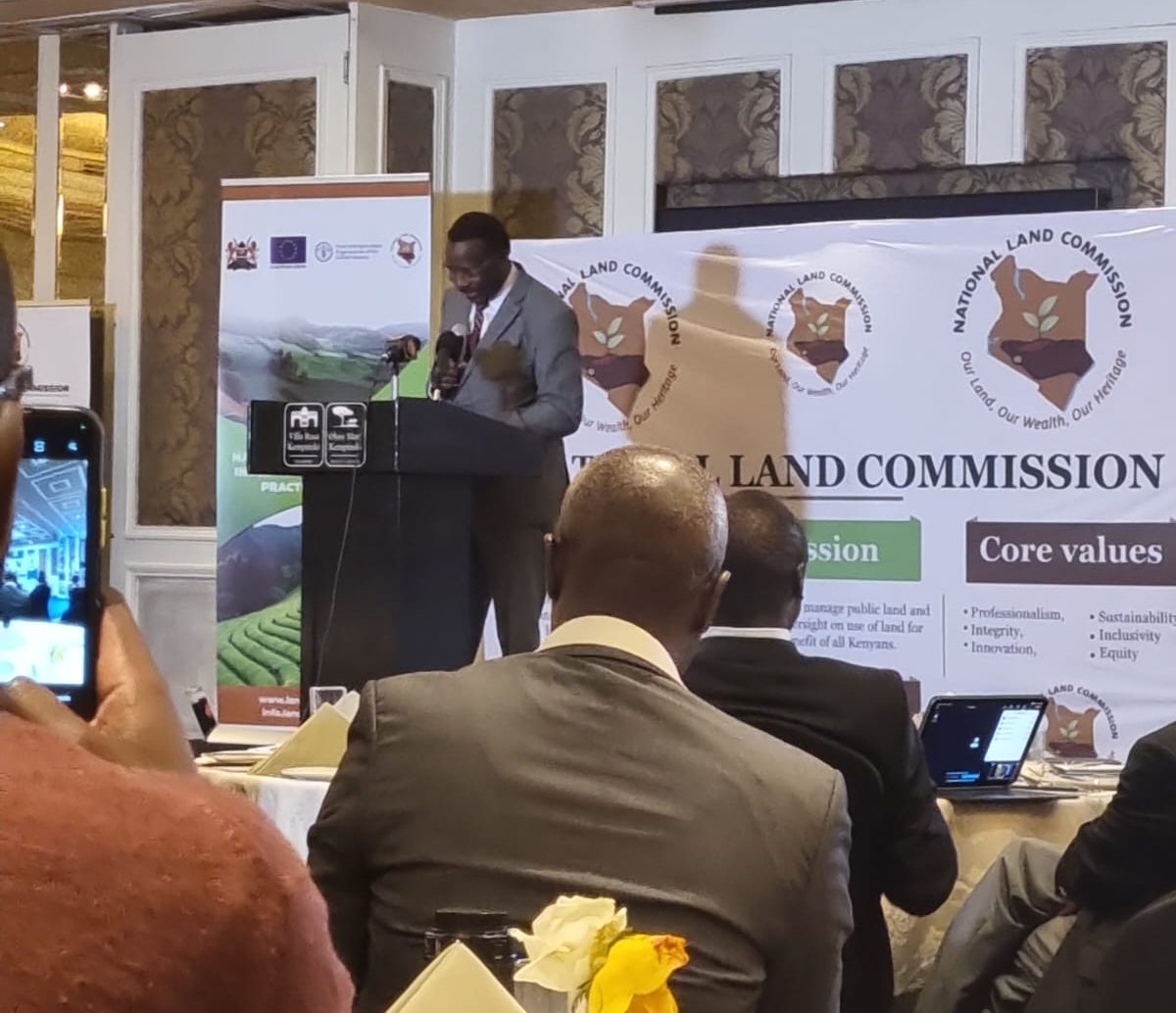
Justice Smokin Wanjala speaking at the unveiling of the Practitioner’s Investigation and Inquiry Guide at Villa Rosa Kempinski, Nairobi.
By Joan Letting

Drylands Learning and Capacity Building Initiative (DLCI) today joined the National Land Commission and other partners in a historic launch of the Practitioner’s Investigation and Inquiry Guide. The guide is a practical advisory handbook that the NLC commissioners and their supporting technical staff will use during their investigation and inquiry activities to resolve land disputes and guide policy directions. The guide also identifies the roles and responsibilities of diverse key stakeholders and their interface with the NLC for effective land dispute resolution and sustainable policy implementation.

Some of the solutions for land disputes presented by NLC’s Vice Chair, Gertrude Nguku, include:

  • geospatial development
  • Jurisprudence: Ensure due diligence when buying land.
  • intergovernmental dispute resolution: national and County Governments
  • The Integrated Financial Management Information System (IFMIS) is the engine, as many losses have occurred due to litigation and environmental degradation issues.
  • Joint committees to determine disputes.
  • Community Initiatives: Alternative Justice systems
  • Mediation, conciliation, and reconciliation.
EU Head of Section Green Growth and Livelihoods, Myra Bernardi, speaking.

The European Union Head of Section Green Growth and Livelihoods, Myra Bernardi, said, “The European Union continues to support the digitization of land records, which now works in Nairobi. The same will be rolled down to other counties… We are glad that the guide will be key in resolving the many land issues.”

The Chief Guest Supreme Court Judge, Justice Smokin Wanjala, representing the Chief Justice, Lady Justice Martha Koome, lauded the NLC for launching the guide.

“The guide will bring much-needed hope to resolving any land cases, especially those that have stalled in the courts for years,” said Justice Wanjala.

Summary of what the Practitioner’s Investigation and Inquiry Guide entails.
DLCI’s Role

DLCI has been and continues to be a major actor in supporting the implementation of the Community Land Act 2016. See here We sensitise the communities in the drylands on the importance of registering their land, and we support them through the registration process.

One success story is when DLCI, in collaboration with the Frontier Count Development Council (FCDC), the Directorate of Land Adjudication, supported the Kamuthe community in Garissa County to become the first former trust land community to receive their community land title deed.

Our commitment remains unwavering as we continue to sensitise and support communities in the drylands through the land registration process. Join us in championing positive change and empowering communities to own their precious resource, land. Home – National Land Commission


Hi! I'm DLCI's AI assistant. What can I help you find today?