” My message for COP 28″ – DLCI CEO Jarso Mokku.

By Mr. Jarso Mokku.

The hottest year recorded on Earth is coming to an end. The world leaders are gathering in Dubai for COP28, which promises to bring more concrete action around loss and damage.

Various agencies and institutions concerned about climate are putting forward ideas for discussions, and negotiations that will make connections between climate, peace, and security. DLCI is not left behind.


Unifying Voices: Celebrating Success at Voice End-year E-Meet

By Joan Letting

DLCI held its end-year Voice Linking and Learning e-meet, which brought together 26 participants from 23 Voice grantee organisations in Kenya.

Throughout the session, partners exchanged success stories, discussed challenges, and shared valuable learnings from their organisations. They also highlighted their distinctive experiences with Voice’s linking and learning concept, expressing their appreciation for the Voice project.

Here is what John Wambua from the United Disabled Persons of Kenya said: “I have always been impressed by the way the linking and learning sessions have been conducted. It has been nothing short of impressive. You go to a meeting, and you find that everything is where it is supposed to be, from the meeting infrastructure to IEC materials ensuring the inclusion of persons with disabilities. The content of the linking and learning events has always been well thought through.” Listen here Hand Pointing Down Vector

“The linking and learning concept is great as you can still link and learn with other organisations even when you do not have funding using online spaces,” said Yasah Musa from the Nubian Rights Forum.

Nancy Nyaleso from Empower Her Initiative, based in Kakamega, said, “The linking and learning concept is an intentional platform where we can meet and interact with other grantee partners and find ways of collaboration.


Voice Project 

All grantees lauded the Voice project for its flexible grant system, user-friendly reporting, and its ability to support unregistered organisations under their hosts. They highlighted Voice’s dedication to empowering grassroots organisations that typically struggle to secure funding. The linking and learning concept, as the heart and soul of Voice, was noted as a very innovative approach that sets Voice apart from other donors.

“Voice understands grantees, gives them space to think through their project ideas, and gives us room to implement because the understanding is that what Voice needs to see is the change,” Wambua said.

Mzungu Ngoma from the Institute of Participatory Development Kulamusana IPD-K in Kilifi County said, “Voice reporting is very friendly, as you can have conversations with the Voice country team at Hivos, making reporting easier. The outcome harvesting concept is also important as it enables organisations to report on all outcomes from the project as opposed to just the expected ones.”

Linking and Learning e-meet participants Kenya

Funded by the Ministry of Foreign Affairs of the Netherlands and implemented by Hivos and Oxfam, the Voice project in Kenya supports 30 grantees, focusing on five main rightsholder groups, including people with disabilities and marginalised women. Drylands Learning and Capacity Building Initiative (DLCI) is the national linking and learning facilitator in Kenya.

Welcome to DLCI (Rtd) LT. Gen. Adan Mulata.

DLCI is thrilled to have hosted Lieutenant General (Rtd) Adan K. Mulata, the Executive Chairman of the Prospect Peace Institute (PPI). The PPI is an independent policy research and consultancy firm based in Nairobi.  The Institute exists to respond to contemporary global geo-political dynamics in economic, political, and military spheres, which are factors of increasing state fragility, conflicts, or instability across Africa.


The Institute seeks to strategically influence policymaking, approaches, and strategies in security, defense, foreign policy, peacebuilding, conflict prevention, management and resolution, governance, regional integration, and cross-border relations in Africa.

During our meeting with the Executive Chairman of PPI, we explored collaboration opportunities between PPI and DLCI, setting the stage for exciting future partnerships. DLCI and PPI are keen to collaborate in various critical areas including policy research, peace initiatives, governance and development, geopolitics, security and integration, training and capacity building, and environmental security. Together, we aim to contribute positively to addressing complex challenges and promoting sustainable progress in these vital spheres.

PPI Executive Chair (Rtd) LT. Gen. Adan Mulata and DLCI CEO Jarso Mokku

This promising partnership embodies our shared values and commitment to fostering positive change and advancing the cause of improving policy and practice in the Horn of Africa around peace, security, and development. We look forward to working closely with the Prospect Peace Institute (PPI) and embarking on this journey of meaningful collaboration. Stay tuned for more updates on our joint initiatives soon.

DLCI Hosts Remarkable Global Voice Linking & Learning E-Meet

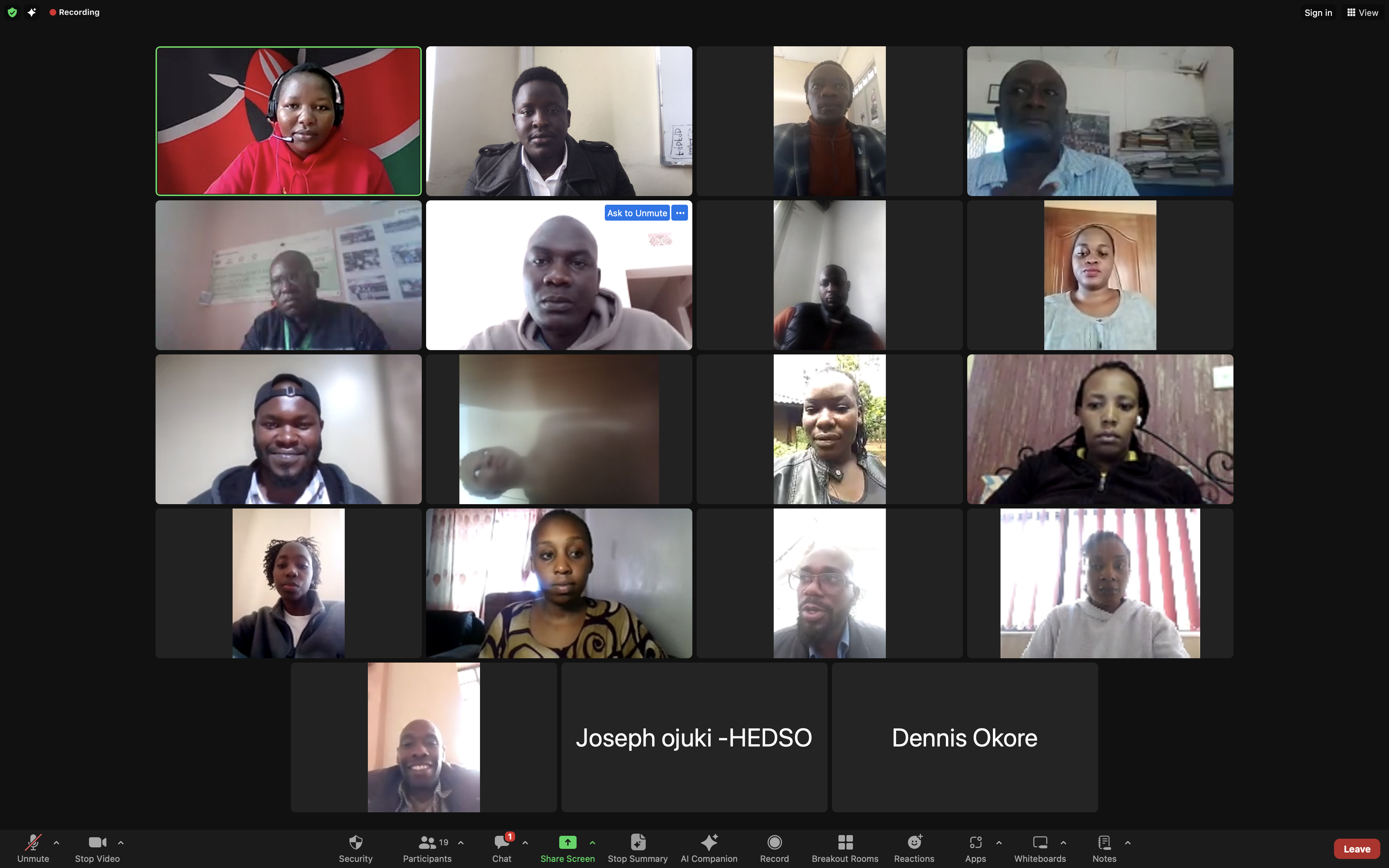
Linking & Learning E-meet participants on Zoom

 By Joan Letting

DLCI this week lit up screens worldwide with a dynamic global Voice Linking & Learning E-meet.  The theme of the event was ‘Lights, Camera, Action: Harnessing Film’s Power for Advocacy.’

The event commenced on Monday with the screening of ‘Natiir,’ a poignant film produced by Asewark Productions, a Voice Grantee. The film, starring renowned model Ajuma Nasenyana, tells the inspiring story of a young girl from the marginalized Turkana community. Despite facing displacement, early marriage prospects, and a betrayal in her educational journey, she perseveres, ultimately becoming a Member of Parliament and aspiring to become Kenya’s first lady president.

On the second day of the event, 33 participants, including Voice Linking & Learning Coordinator Inez Hackenberg, Voice Communications Officer Kayla Lapiz, and Voice Roving Monitoring and Evaluation Officer Alexander Loer, joined in. The participants represented Linking & Learning Amplifier Officers and Linking and Learning Officers from 10 countries: Indonesia, Philippines, Tanzania, Laos, Cambodia, Uganda, Niger, Mali, Nigeria, and Kenya. Together, they engaged in a dynamic exchange of ideas and experiences.

“That was a great topic, well executed,” Inez said.

Linking and Learning is the heart and soul of Voice. Voice is a project funded by the Ministry of Foreign Affairs Netherlands and implemented by a consortium between Oxfam and Hivos.

Drylands Learning and Capacity Building Initiative DLCI is the national Linking and learning Facilitator in Kenya. We support 30 Voice grantees from across the country to link and learn from each other.


Taking the Lead: African Leaders Nairobi Declaration on Climate Change and Call To Action

African Leaders led by President William Ruto have acknowledged that climate change is the single greatest challenge facing humanity and the single biggest threat to all life on Earth.

In their declaration dubbed ‘The African Leaders Nairobi Declaration on Climate Change and Call To Action’ at the first African Climate Summit, currently underway in Nairobi-Kenya, they noted that the issue demands urgent and concerted action from all nations to lower emissions and reduce the concentration of greenhouse gases in the atmosphere.

The leaders have urged world leaders to rally behind the proposal for a global carbon taxation regime including a carbon tax on fossil fuel trade, maritime transport, and aviation, that may also be augmented by a global financial transaction tax (FTT)) to provide dedicated affordable and accessible finance for climate-positive investments at scale and ringfencing of these resources and decision-making from geopolitical and national interests.

Read the full declaration here: Declaration on Climate Change


Explore our CEO’s Insights on Climate Change and Carbon Credits in Anticipation of the African Climate Summit.

Discover valuable perspectives as our CEO, Jarso Mokku,  delves into the pressing matter of climate change and its correlation with carbon credits, offering insights that set the stage for the forthcoming African Climate Summit. Listen and watch to gain a deeper understanding of this critical discourse.

Navigating Paths of Peace: A North-Rift Tale

By Rayson Lotengan

Conflict in the Northern region Counties in Kenya has reached a stalemate where peace and security have become unfeasible to attain without military intervention. Despite leaders from the region and all Pastoralist Parliamentary Groups PPG leadership having peace meetings, nothing persuasive has been done to break the conflict stalemate in this region.

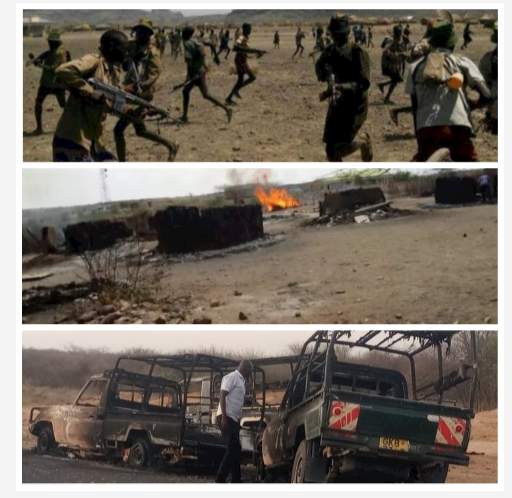
Police vehicles and houses torched by bandits. Photo: Courtesy


The conflict in the North Rift Counties is believed to be caused by inter-community fighting for minimal natural resources like water, grazing lands, and raids. However, in recent times the act of raiders towards each cannot be categorized as any of the above factors but an act of tribal terrorism.

Illegal gun ownership and the lack of law enforcers in the region have made gun owners feel like heroes and impose their laws as they wish. Raids and terrorism have led to territorial claims and attempts to divide communities along tribal lines exacerbating the already fragile peace in the region.

Peace and security are the backbones of any progressive State. Without peace, there is no development. Globally, every state recruits military and intelligent personnel each year to ensure their citizens enjoy peaceful and workable territory. This includes States like the US, Russia, China, France, and Britain which employ Mutually Assured Destruction (MAD) weapons to deter potential threats from foreign aggressors. These states put a lot of resources into military and intelligent personnel to ensure their countries have long-lasting peace.

Understand that State instability is not caused by external aggression but by the internal conflict within the communities. For example, the Kenya Post Violence Elections 2007 was supposed to be a lesson to Kenyan leaders and citizens. However, the North Rift conflict is at its peak, despite the lessons learned in Kenya’s 2007/2008 Post Election Violence, the current conflict in the North Rift has not received the attention it deserves. The media’s coverage has been limited and even discussions in the parliament have failed to generate significant action. When a debate about the insecurity situation in the North Rift is brought to the chambers of the parliament many legislators oftentimes leave the chambers with the reason of feeling unbothered about the hostilities.

These conflicts are more dangerous to any Nation’s stability than any threat from foreign aggressors. Imagine a scenario where the state is trying to stop terrorism from overseas while we get bandits who terrorize citizens daily. The consequences of this indifference are dire with more than 20 lives being lost every day, impacting the Nation’s economy and social fabric.

To overcome biases and ensure effective peacebuilding, it is essential to involve all affected communities and genuinely consider their perspective without tribal preferences. Some of the recommendations for sorting this perennial problem once and for all include:

Local Driven initiative

The peace initiative should be a locally driven notion supported by neutral peace institutions and the National Government. The local elders from all conflicting communities should be facilitated to drive the peace implementation process in the region because these elders are not just ordinary people but are the face of their respective communities. These are the people whom their leaders believe when they comment about boundaries, the boundary conflict is originating from these people. Therefore, if the government and any other peace-implementing partners succeed in uniting the elders to drive the peace process, it will eliminate the idea of boundary conflict which is the main factor that brings tension.

Elders’ unity will break a conflict stalemate since the peace notion will be based more on interpersonal relationships, this will pave the way for long-term peace rather than political class interventions that depend on the relationships of politicians with constituents. A personal relationship is better than focusing on the comfort zone of political leaders because what happens if it will not conform to their expectations?

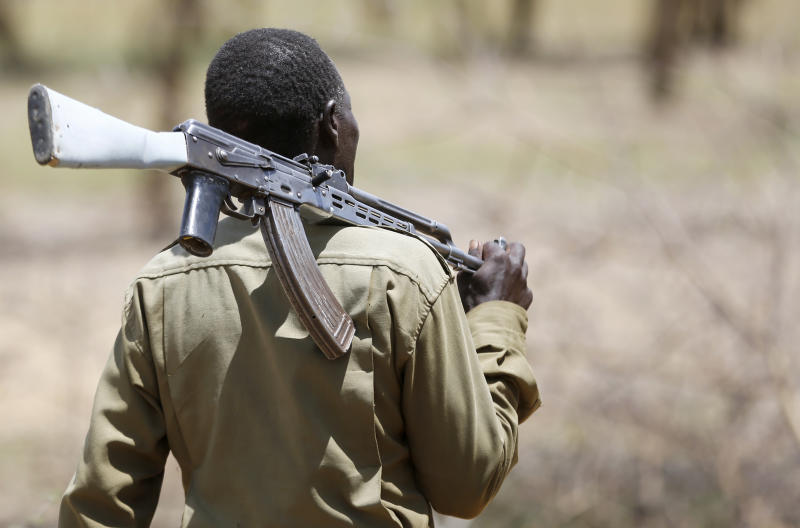
An armed man spotted in the North Rift. Photo: The Standard
Strengthening of Law enforcement

Establishing and Operationalizing a Military camp and a police post in the region is essential to maintain law and order. Criminal elements exploiting the conflict must be identified and dealt with promptly as they use conflict to terrorize other communities ensuring there is no tranquillity. To identify those criminals’ the police and military must involve the elders in the investigations and that is why the elders’ unity is very paramount to the operation.

Promoting Economic Integration

Lastly, the government and other implementing partners should intently create a thriving business town that will help in bringing together the conflicting communities. Encouraging business activities and trade among different groups can foster co-existence and reduce animosity, paving the way for sustainable peace. This will also be a business destination for many local communities around the region.

The above recommendations are interdependent with each other because it’s impossible to attain peace without unity among elders which extends to the community. Effective law enforcement involving the military, police operations, patrols, and economic integration is key. The government, peace institutions, civil society, and all stakeholders must join hands to achieve this goal. Only through genuine collaboration and understanding can the North Rift break free from its conflict stalemate and pave the way for a future of lasting peace and prosperity.

Taking Pastoralist Voices Global!

By Wario Malicha

A pastoralist leads his cattle home. Photo: Courtesy

For close to 50 years or so, pastoral policy development across the Horn of Africa has been riding on the wave of illusion premised on the move that experts and development practitioners are the best adjudicators of any pastoral well-being. They organize short field assignments to get an impressionistic view of rural lives and livelihoods, when the weather is most pleasant and get back to the high-end office, spin that comfy chair and examine the instruments to derive the finding that will be used for recipients that were never part of the project from the inception.

This development tourisms adds to the complacency by providing a snapshot of ‘better-off’ dusty thatched houses in the villages. Such an approach presumes people as mere objects of development and adopt a ‘blueprint’ to the issues concerned.   The crux of development is transformation of quality of standards including better quality of life, being free from hunger and disease, food security and state of being happy, as explained in Sen’s Capability Approach by Amartya.

Climate change is putting increasing pressure on the Tana Delta’s residents and their surrounding ecosystems, with farmers and herders clashing as they vie for access to land and pasture.
A pastoralist taking care of his livestock. 

In the research for reality and valuable policy approach to the lives of the pastoralist and their future generations, and being the youngster who knows the value of pastoralism by taking care of herds and knowing its commercial and inheritance value, I have come to my conscious that voice of the pastoralists should be brought to the global stage. It should not be through images of herders taking care of their livestock in their tradition attires but rather through co-creation. Shifting from definition of pastoralists are being retrograde and unschooled [yet all those PhD fellows and scientist derived knowledge from them to publish a working paper or policy/ evidence brief] to being vehicle that will be used to cross poverty line.

Co-creation

The perception of pastoralists can be revealed and understood through co-creation, closely linked to participatory epidemiology, to:

  1. Consider indigenous knowledge system as antidote to challenges in drylands. Long before the reality of contemporary development model and flow of aid, pastoralist community face those challenges, however they maybe of lesser magnitude, had own way and resource of overcoming those issues, perhaps, more profound that the present-day approach that is accompanied by multibillion dollar scheme sand investments in the Horn. Just because the stomach is empty it does not mean that the brain is dead. There are reserve in the brain for local knowledge imprinted.

“The voices of the pastoralists should be brought to the global stage  through co-creation.”

  1. Make pastoral communities involved in pursuit of their own lives and livelihood. There is no way you can describe the initiatives that has been designed in high-end apartment as being participatory. Discounting the very recipient of the project should be treated as ‘development transgression’ and that is why it is difficult to put the development partners to visibly account for the dollar spent in dryland. Be part of the voice that brought you to self actualization!!


Wario Malicha is a social development expert and research consultant. He holds Advanced Masters of Science in Governance and Development from Institute of Development Policy, University of Antwerp, Belgium. His is a development practitioner and research consultant with over 8 years of experience in Northern Kenya and Southern Ethiopia on conflict, natural resource management, and climate change adaptation.

He has worked with the United Nations and led drylands management projects at regional, national and local level including tracking policy development at the Kenya Institute for Public Policy Research and Analysis (KIPPRA), assessing impact of social policy in Northern Kenya, mapping stakeholders in the livelihood and resource management, among others. Wario understands pastoral livelihoods, policy research processes, social evaluations, and project management at local, national, and regional levels.

West Pokot leaders want more funds to improve education in the county.

Lack of infrastructural Development and learning facilities affecting education in Pastoral areas.


ARTICLE BY OSCAR KAKAI | NTV KENYA.

A concern has been raised over lack of infrastructural development and learning facilities in schools in remote, pastoral areas in Kerio Valley region.

It has been established that many learners in West Pokot County still learn under trees because of the lack of classrooms. Some schools in the region were vandalized by bandits.

Residents and area leaders who cited insecurity as the main cause contributing to poor education standards in the semi-arid region now want more resources and funds to improve education in schools and rehabilitate learning institutions that were destroyed by bandits within the region.

They are now calling on the government through the ministry of education to put more funds for infrastructure development in schools in remote pastoral areas to improve education and help spur development in the region.

They claimed that there exists biases in distribution of the funds in primary and secondary schools and across the Country.
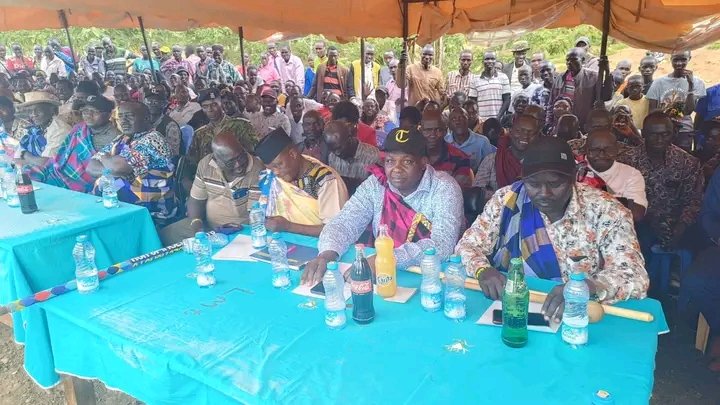
Sigor Constituency MP and PPG Organizing Secretary, Hon Peter Lochakapong seated between Kapenguria Mp Hon. Samuel Moroto and Lomut MCA Jacob Toungole.

Sigor MP Peter Lochakapong and his Kapenguria Counterpart Samuel Moroto called for an affirmative action in education by putting more resources and improving infrastructure in schools along County borders to help learners in the region access education.

They called on the government to create clear policy in giving out the funds.

Speaking on Saturday at Lomut Primary school during the launch of the new school courtesy of the Sigor Constituency Development Fund[CDF] residents and leaders said that schools along the borders are in deplorable conditions and learners take their studies in poor learning environments and inadequate infrastructure and facilities.

The leaders said that this will help curb insecurity in volatile areas to promote education and help curb insecurity.

“We want equality in giving out the funds. Many children drop out of school because of lack of facilities and hence migrate with their parents in search of pasture and water,” Lochakapong said.

Lochakapong who expressed his desire to help alleviate the challenges that pupils face at school through the support of area leaders and County government said there is need to promote education in interior areas which used to experience insecurity hence were marginalized.

“This area pastoral areas that were marginalized and we need more infrastructural funds because our children needs to access quality education .This is one of the best school and the second primary school to get a bus in such like a remote area .It will ease movement for learners,” Lochakapong said.

The legislator pointed out that some schools have not been opened due to insecurity.
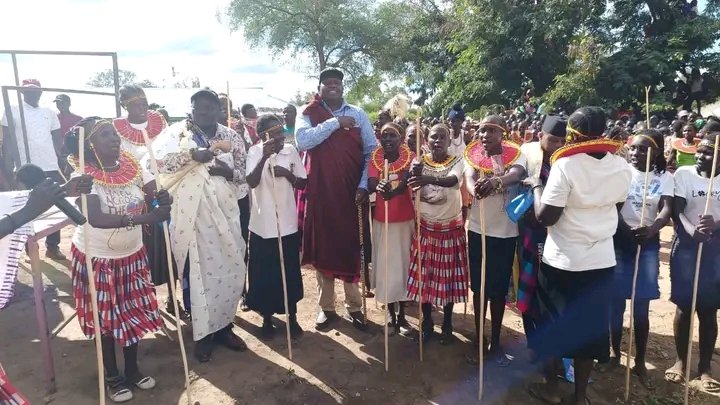
Sigor constituency MP Hon. Peter Lochakapong with his constituents.

“We need more security officers to man the schools. We need schools that were destroyed along the county borders to be reconstructed. The construction of Chesegon Technical Training College[TTI] stopped due to insecurity,” he said.

“Education is the only tool for development that can change the region. We need our children to go to school so that we can compete with other communities.”.

He called on the government to beef up security in border schools affected by insecurity.

“Learners and teachers staying in fear due to attacks,” he said.

Moroto said that it is hard for the County to compete with other Counties because of the many challenges.

‘It is wrong for some areas to get the infrastructure funds but others left out. The President promised to set up three boarding primary schools along the West Pokot and Turkana border for learners from the two communities to learn together,”he said.

Phillip Yarapong, a resident, said that learners walk for more than four kilometers to school.
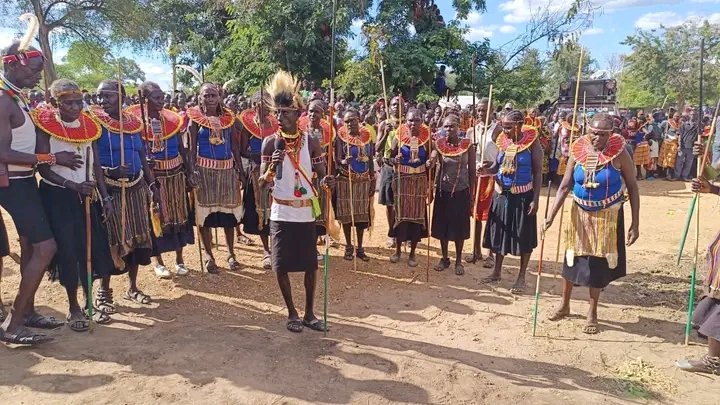
Traditional Pokot Dancers performing at the ceremony.

“When Lomut River overflows during heavy downpour, children get difficulties crossing it. We prefer them to be borders but there is a challenge of food. Children of four classes learn under trees in Chepser primary school,” he said.

Lomut Acting Chief Yohana Loritai noted that learners in the region have embraced education but schools have no classrooms.

“Lomut primary has many learners and we need three more schools. In Kapsesis,Pelet, Chim and Purongan schools children learn under trees,” he said.

Christine Lokotan, a resident of Chesegon noted that many learners learn under trees and hence learning is affected.

“They have difficulties during rainfall seasons and have no desks because they sit on stones,” she said.


Article originally published by NTV Kenya.

Hi! I'm DLCI's AI assistant. What can I help you find today?