The Bridge Generation: Youth, Technology, and the Future of Pastoralist Knowledge
By Hillary Kitel – Programs and Communications Officer – DLCI
The International Year of Rangelands and Pastoralists gives August the theme “Indigenous and local knowledge, culture, and innovation.” The strategic question is not simply how to preserve pastoralist knowledge, but how to keep it authoritative, adaptive, and useful over the next twenty years.
Youth are the bridge: when they combine elders’ place-based judgment with digital tools, they can turn inherited knowledge into faster decisions, stronger livelihoods, and greater policy influence.
This is not a sentimental claim about generational renewal; it is a structural one. Indigenous and local knowledge in the drylands has never been static text that can be archived once and read forever. It is a living practice, updated in real time by people moving with herds across changing land, and it only persists if someone keeps updating it. When young people leave pastoralist systems for towns and cities, the knowledge does not wait for them. It thins with each season an elder ages without an apprentice, and it becomes fragile long before anyone notices the gap.
The evidence is already visible. At the East Africa Pastoralist Youth Gathering in Moroto on 20–21 November 2025, more than 150 young pastoralists from Uganda, Kenya, Tanzania, Ethiopia, and South Sudan met to shape a regional youth agenda ahead of IYRP 2026. The significance was not attendance alone, but the shift from symbolic inclusion to practical leadership.
Participants paired dialogue with field-based learning in the Moroto rangelands, including a Kobebe visit, shepherd panels, country caucuses, cultural practice, and exchanges with elders. They advanced concrete priorities: customary tenure protection, cross-border mobility, youth representation in rangeland governance, early-warning systems, livestock insurance, and youth-led restoration. This is the real site of innovation, not knowledge alone and not technology alone, but the interface between them, with youth designing how both are used.
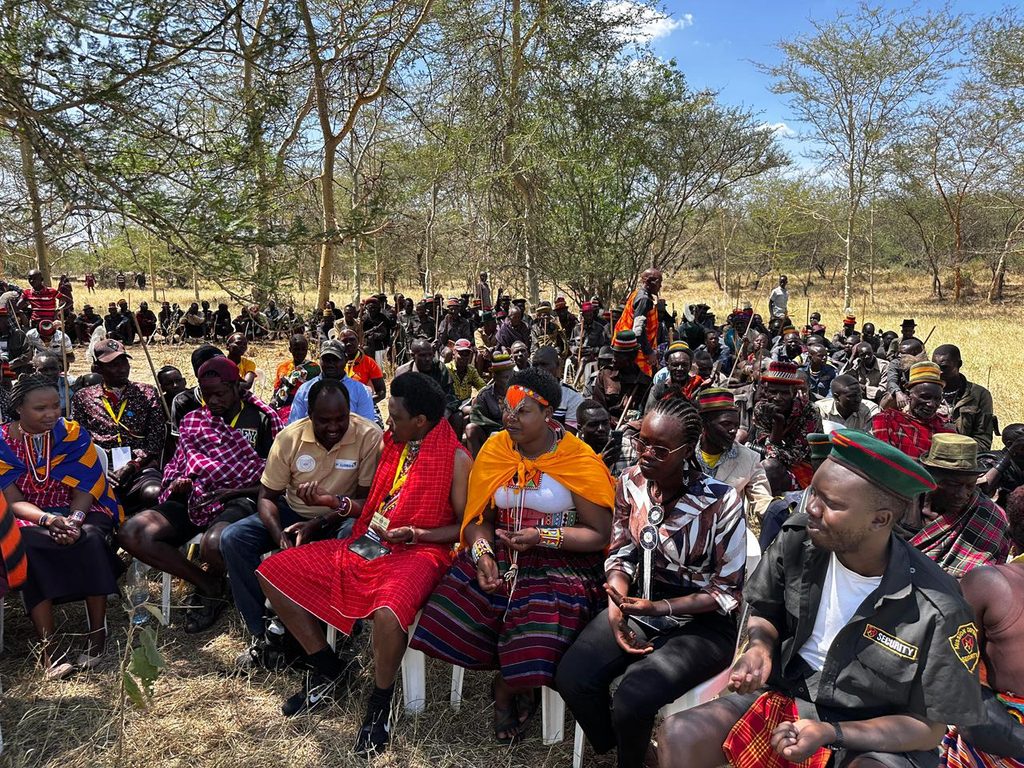
East Africa Pastoralist Youth Gathering in Moroto; Photo credits: Impact Kenya
This matters because the gap technology cannot close on its own is exactly the gap Indigenous knowledge has always filled. A weather forecasting app can tell a herder that rainfall is likely to be below average this season. It cannot tell them which corridor an elder has used for forty years precisely because it floods less than the one two kilometers over, or which grazing reserve should be held back now so it survives a drought three years from now. That judgment is accumulated, local, and specific in ways no dataset yet replicates. What changes when youth carry both the knowledge and the tool is not the knowledge itself. It is its reach and its speed.
FAO’s own framing of IYRP 2026 argues that broader access to new technologies, markets, and financial services is what opens opportunity for pastoralist youth and women, not any single tool. The specific innovations it names, mobile herding apps, weather forecasting, animal health services, field schools, and cooperative models, are offered as examples of that access, not as tools built for youth specifically.
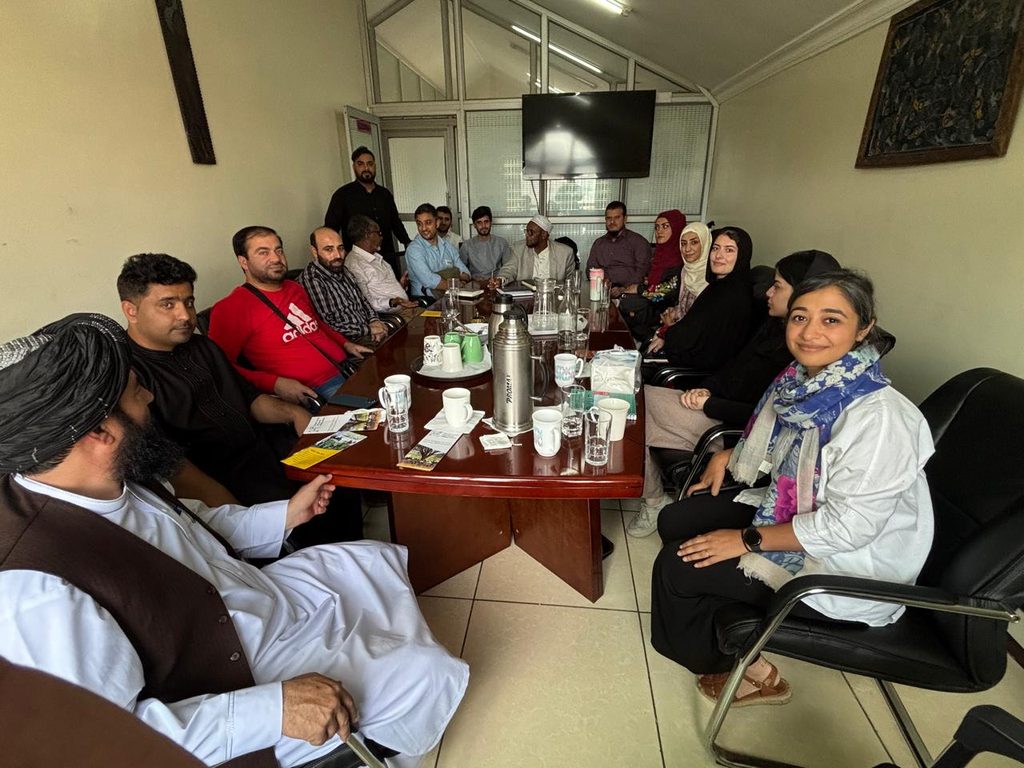
At GLF Africa 2026, more than 800 participants gathered at the CIFOR-ICRAF campus in Nairobi, and more than 5,500 joined online. The forum brought pastoralist communities, researchers, governments, technology specialists, youth organizations, and women’s groups into the same conversation and reinforced a central message: community knowledge and modern data must be treated as complementary resources for action.
That distinction determines what growth actually looks like here. It is not growth measured only by herd size or milk yield, though those matter. It is growth measured by whether a young herder can access a fair market price because a mobile platform gave them real-time information an elder’s networks alone could not reach in time. It is measured by whether a community can act three weeks before a drought instead of three weeks after, because youth translated an early warning system into a language and a channel their community already trusts. It is measured by whether land rights and mobility corridors, negotiated in customary terms for generations, get documented and defended in the formats that national policy and cross-border agreements now demand. And it is measured, less visibly but no less concretely, by whether a young person can build a livelihood inside pastoralism at all, rather than treating it as something to leave behind for a city job that may not materialize.
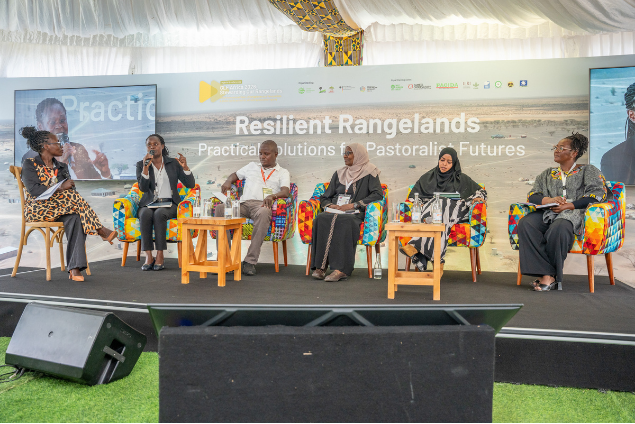
Photo credits: GLF Africa
This transition will not happen automatically. Governments, donors, technology firms, and pastoralist institutions should act on three priorities: fund reliable connectivity and youth-led digital services in the drylands; establish paid intergenerational apprenticeship and documentation programs governed by communities; and require Indigenous knowledge to inform early-warning, land-use, mobility, and livestock policy alongside formal science. August’s theme should therefore be treated not as a celebration of the past, but as an investment mandate for the future. Young pastoralists are not choosing between tradition and technology; they are building the system through which both can deliver resilience, dignity, and economic opportunity.