United for Land, Legacy, and Livelihood: – Pastoralist Communities Push Back Against Fragmentation and Resource Destruction in Isiolo.
Article by Dr. Jarso Mokku. Chief executive Officer, Drylands Learning and Capacity Building Initiative
On Mashujaa Day, while the nation honored heroes past and present, 150 pastoralist elders from five Dedha communities gathered in Kulamawe to write a new chapter of collective resistance and renewal. Their mission was clear: to defend their ancestral rangelands, accelerate community land registration, and confront the growing threats to their autonomy, ecology, and cultural integrity.
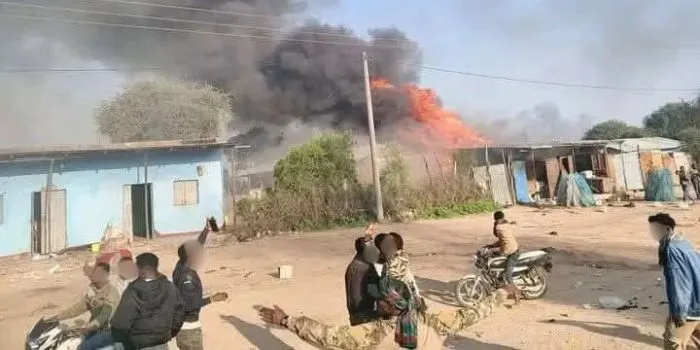
Operating under the banner of Gumi Waso—a traditional alliance of dryland communities—the elders from Sericho, Garbatulla, Kina Kulamawe Gotu, and Chari Dedha stood in solidarity with the Kina Kulamawe Gotu Dedha Community Land Management Committee (CLMC), whose land registration process has been stalled by alleged interference from the Isiolo County Community Land Registrar. Though Cherab Dedha delegated was absent due to mourning the tragic killing of five young men, their spirit was felt in every resolution that was passed at the gathering.
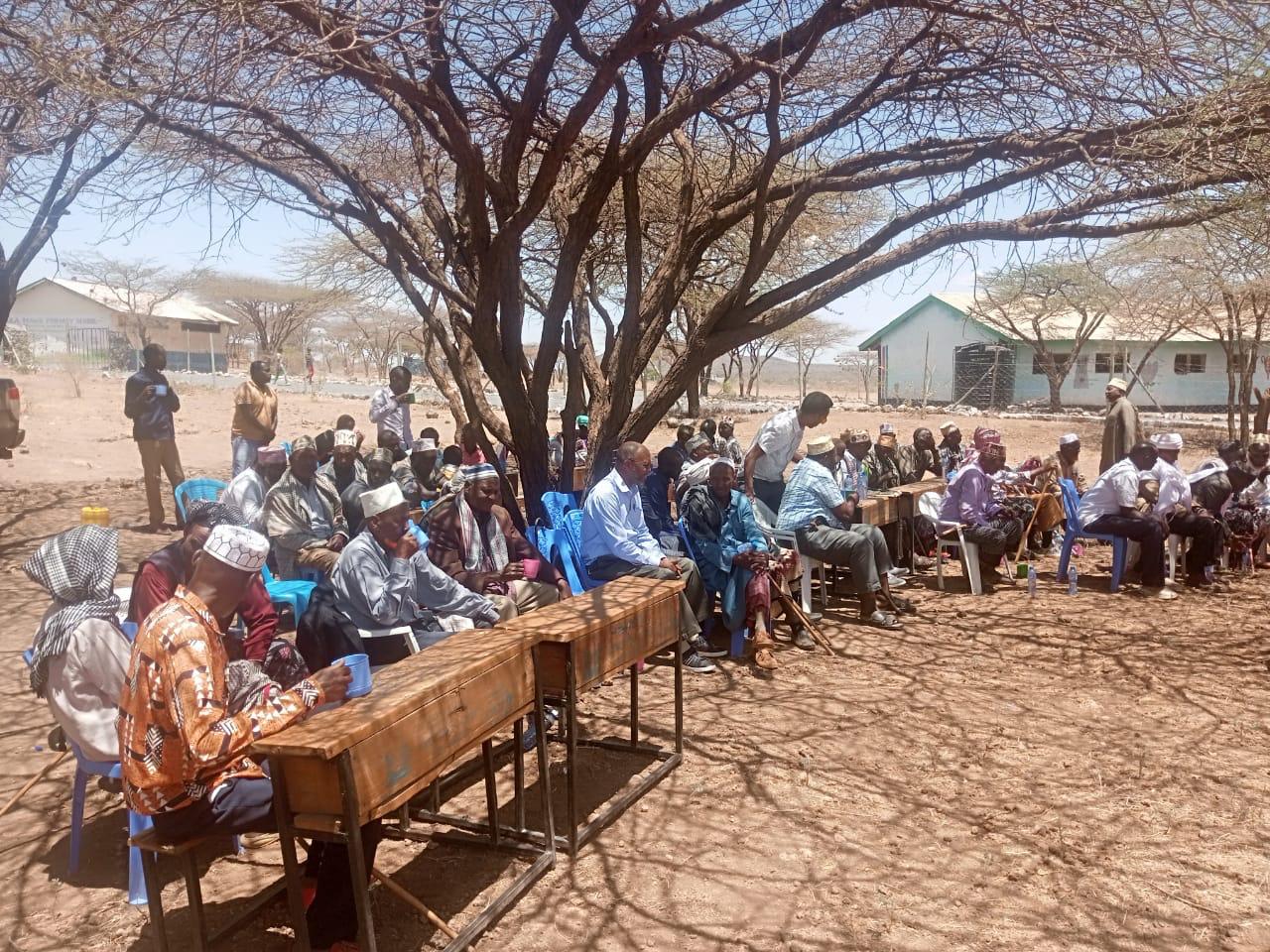
At the heart of the dispute lies a troubling attempt to fragment the Kina Kulamawe Gotu Dedha community assembly by carving out Gotu location to form a separate CLMC. This move, reportedly initiated by community land registrar without consultation with the legally elected 15-member CLMC—of which Gotu already has two representatives—has triggered a High Court petition and halted the entire registration process. The elders, led by CLMC Chairman Mzee Osman Dima Jillo, condemned the registrar’s actions as a violation of community agency and a threat to the integrity of their rangeland governance.
But this gathering was not just about land title. It was a clarion call to defend the rangelands, the ecological and cultural lifeblood of Isiolo’s drylands. Delegates raised alarm over rampant land grabbing in Garbatulla Dedha and the widespread destruction of the Kina community forest—a vital drought-grazing community reserve and biodiversity refuge shared by all five Dedha. The forest’s degradation, driven by unchecked exploitation and weak enforcement, has reached crisis levels. In response, the elders called for an urgent meeting in Kina within seven days, mobilizing men, women, and youth to halt the destruction and restore stewardship.
Insecurity also loomed large in the discussions. The influx of pastoralists from neighboring counties into Chari and Cherab Dedha has intensified competition over Chari rangeland resources, undermining drought resilience and threatening peace. Delegates warned that without coordinated community-led management, these external pressures could spiral into intercommunity conflict and ecological collapse.
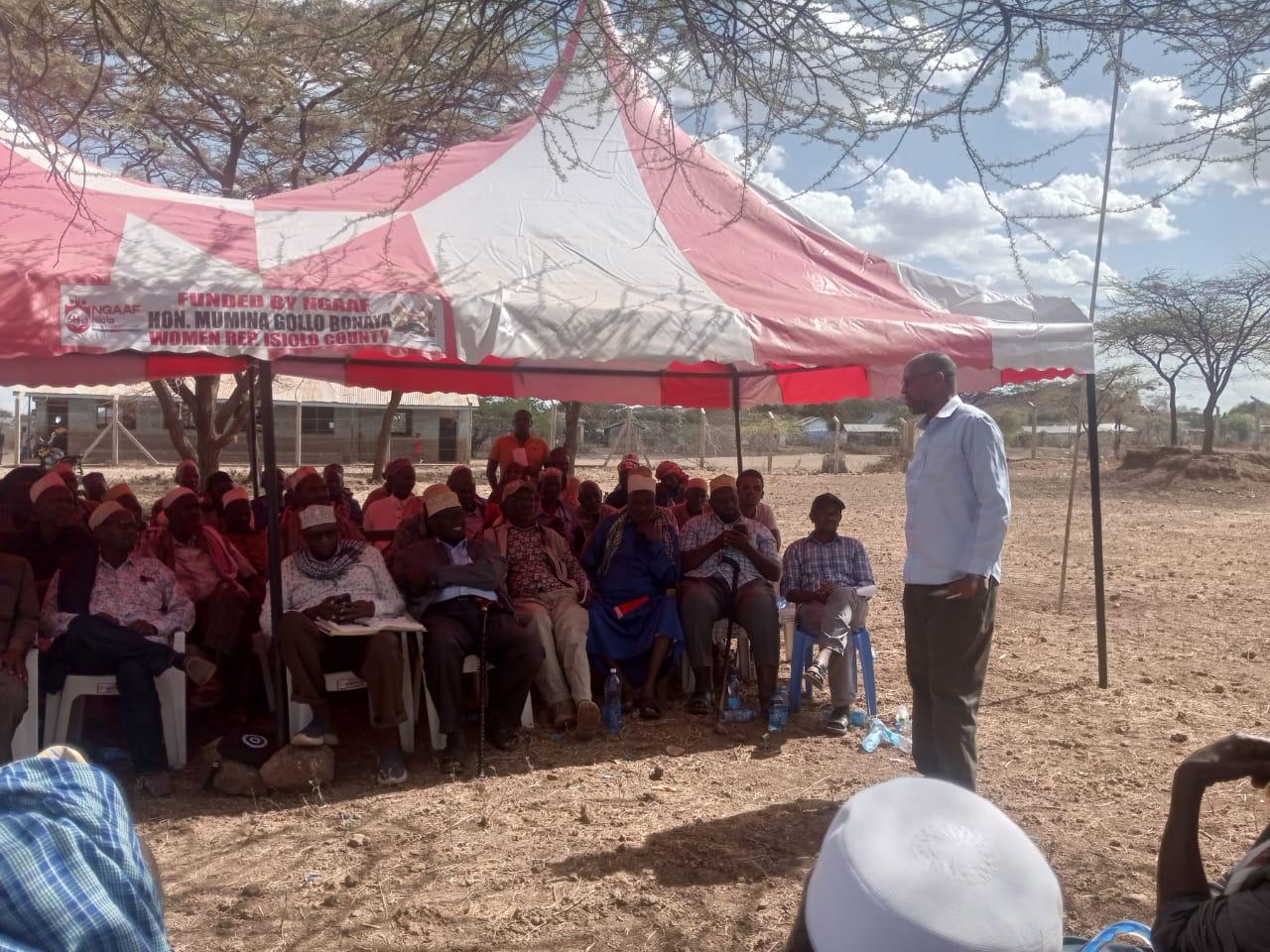
To counter these threats, the Gumi Waso elders committed to sustaining rotational, independent Dedha assemblies—grassroots forums where men, women, and youth deliberate on resource governance, peacebuilding, and development. These meetings, that will be self-funded and community-owned, are a powerful assertion of pastoralist agency in a landscape often dominated by external agendas. The next assembly will be hosted by Sericho Dedha, followed by Cherab Dedha, reaffirming the rotational principle that ensures inclusivity and continuity.
One of the most forceful resolutions from the gathering was a demand for political non-interference and NGOs not brand their meeting as their own. Elders urged politicians to respect community processes and refrain from manipulating land governance for electoral or personal gain. They also called on NGOs to stop branding community meetings as their own, emphasizing that support must be limited, requested, and aligned with community priorities. The message was unmistakable: pastoralist communities are not passive beneficiaries—they are active architects of their future.
This stance reflects a deeper philosophical shift. For decades, dryland communities have been portrayed as vulnerable, backward, or dependent. But the Gumi Waso initiative flips that narrative. It asserts that pastoralists are stewards of vast ecological systems, holders of intricate indigenous knowledge, and defenders of cultural heritage. Their governance structures—Dedha system—are not relics of the past but vibrant living institutions capable of navigating modern challenges.
The Mashujaa Day gathering also served as a reminder that land is not just a commodity—it is memory, identity, and survival. The elders spoke not only of boundaries and titles but of their ancestors buried in these rangelands, of seasonal migration routes etched into the soil, and of the moral obligation to pass on intact ecosystems and biodiversity protection knowledge to future generations. In this sense, the fight for land registration is also a fight for historical justice and intergenerational continuity.
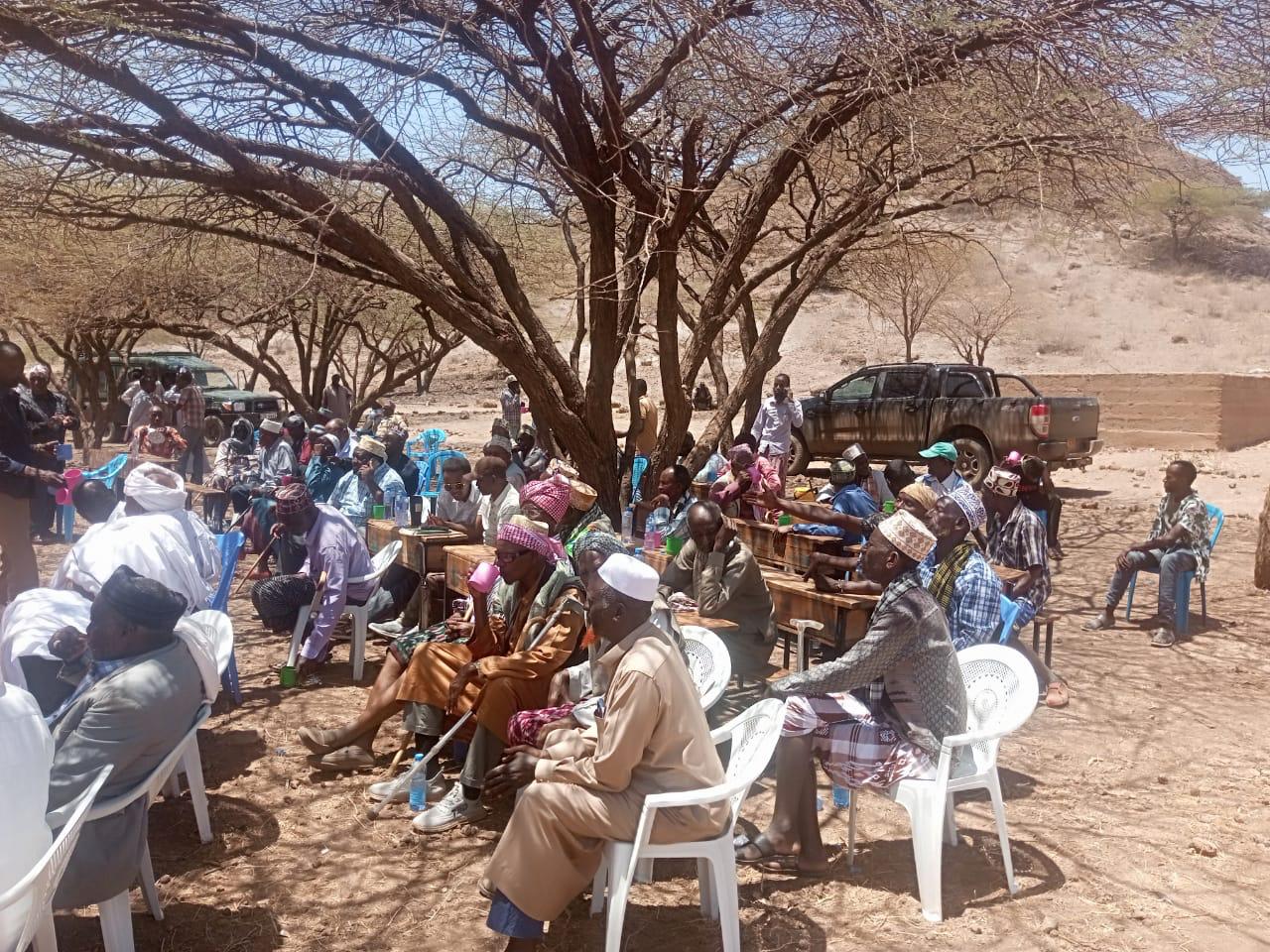
As Kenya continues to implement the Community Land Act, the Isiolo experience offers critical lessons. First, land registration must be anchored in community consent and representation. Attempts to impose parallel structures or bypass elected committees erode trust and fuel conflict. Second, ecological protection must be integrated into land governance. Forests, water points, and grazing corridors are not optional extras—they are the foundation of pastoralist resilience. Third, transparency and collaboration must guide all engagements with government and civil society. Token consultations and top-down interventions only deepen alienation.
The Gumi Waso elders have charted a bold path forward. They have refused to be divided, refused to be silenced, and refused to be sidelined. Their unity, forged in the fires of adversity and rooted in ancestral wisdom, is a model for community-led development across Kenya’s drylands.
As the sun set on Kulamawe on October 20th, the elders did not just mark Mashujaa Day—they embodied it. Their courage, clarity, and commitment to land, legacy, and livelihood make them heroes in every sense of the word.
Now, it is up to the rest of us—government officials, civil society actors, and fellow citizens—to listen, learn, and stand with them.